Srinagar, Jun 04: A comprehensive road safety and traffic management assessment conducted by the UT Flying Squad of the Motor Vehicles Department has painted a worrying picture of traffic discipline and pedestrian safety across Srinagar’s busiest corridors, warning that unchecked violations are pushing the city towards a serious road safety crisis.
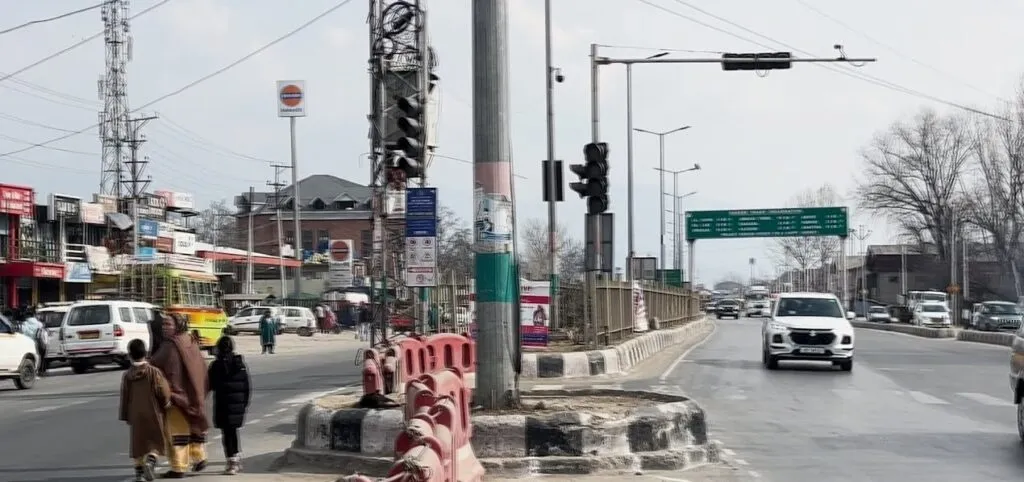
The report, accessed by Rising Kashmir, identifies illegal U-turns, wrong-side driving, unauthorised halting of vehicles, absence of designated bus stops and encroachment of public parking spaces as some of the key factors crippling mobility in Srinagar’s Central Business District (CBD) and along the vital TRC–Jehangir Chowk Flyover–Hyderpora corridor.
According to the report, “unauthorised U-turn movements were observed at several locations”, creating dangerous conflict points that “significantly increase the risk of serious and fatal road crashes”.
The Flying Squad specifically flagged areas, including TRC, Batamaloo, Jehangir Chowk Flyover and HMT Narbal, where frequent traffic violations were recorded during inspections.
The report states that instances of vehicles travelling against the designated flow of traffic continue to pose “a major threat to all road users”, while unauthorised stopping and waiting of vehicles along major roads such as Residency Road, Boulevard Road and the TRC–Hyderpora corridor are creating severe bottlenecks and disrupting traffic movement.
In Lal Chowk and adjoining CBD areas, the report points to large-scale encroachment of designated public parking spaces by commercial establishments, forcing commuters to park along roadsides and aggravating congestion in already saturated markets.
The Flying Squad also expressed concern over the absence of properly designated bus bays and passenger shelters, noting that buses frequently stop at random locations for boarding and alighting passengers, thereby affecting both traffic operations and commuter safety.
“Dedicated bus stops at strategic locations are required for orderly boarding and alighting,” the report states.
Another major concern highlighted in the report is the scattered operation of auto-rickshaws, with drivers allegedly waiting for passengers and picking them up from random roadside locations. Such practices, the report notes, create unsafe conditions for both motorists and pedestrians.
Pedestrian infrastructure has also come under scrutiny. The report observes that pedestrians are struggling due to roadside parking, encroachments and unauthorised vehicle halting, while several locations lack safe crossing facilities, adequate footpaths and traffic calming measures.
To address the worsening situation, the Motor Vehicles Department has recommended installation of medians and bollards to prevent illegal U-turns, strict enforcement against wrong-side driving, development of designated auto-rickshaw stands, removal of parking encroachments and establishment of no-halting and no-parking zones along major corridors.
The report has further called for installation of CCTV surveillance systems and intelligent traffic management infrastructure, along with regular joint inspections by enforcement agencies.
Concluding its findings, the report warns that illegal U-turns, traffic indiscipline and poor public transport management are “adversely affecting mobility and pedestrian safety in Srinagar”, stressing that immediate engineering, enforcement and traffic management interventions are essential to ensure safer and more efficient movement of people and vehicles across the city.