Srinagar, Jun 26: The Shia Muslim community across Kashmir observed Youm-e-Ashura, the 10th day of Muharram, with profound reverence, large-scale mourning processions, religious gatherings, and heartfelt recitations commemorating the sacrifice of Imam Hussain (AS), grandson of Prophet Muhammad (SAW), and his 72 faithful companions in the Battle of Karbala in 680 CE (61 AH).
The day symbolised not only mourning for the historical tragedy but also a universal call for justice, resistance against tyranny, and moral integrity.
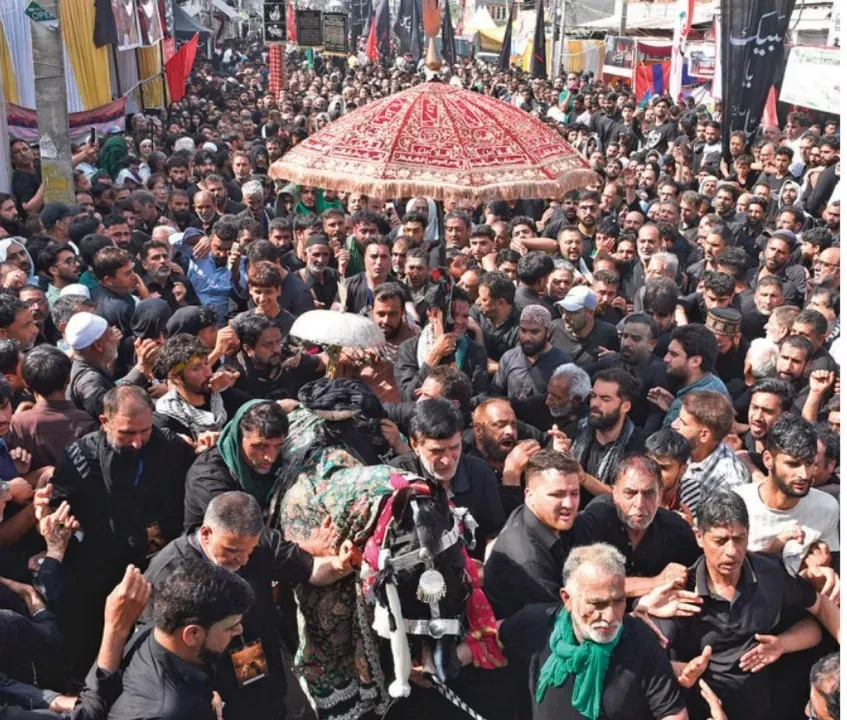
Thousands of Azadars (mourners), clad in black attire, participated in synchronised processions featuring rhythmic chants of 'Ya Hussain,' Nohas (elegies), marsiya recitations, and the ceremonial carrying of Alams (banners), and replicas of Zuljanah, Imam Hussain (AS)'s horse.
In Srinagar, the largest procession commenced early morning from BotaKadal in the old city.
It wound its way through key localities before culminating in the evening at the historic Imambargah at Zadibal.
Senior Shia clerics led the procession, delivering powerful sermons that highlighted Imam Hussain (AS)'s teachings, the values of sacrifice, and the enduring relevance of Karbala.
Community leaders joined in, stressing interfaith harmony and unity.
The symbolic Alam and Zuljanah processions added deep emotional and traditional resonance, reenacting elements of the Karbala events for participants and onlookers alike.
Observances extended to every corner of Kashmir, showcasing widespread participation.
In central Kashmir’s Budgam district thousands joined processions from GaziManzil to ImambargahYousufabad in Magam and Sonpah.
In north Kashmir, mourners turned out in strength in areas like Hanjiveera, Dab Wakora, Pattan, and Baramulla.
In south Kashmir gatherings and rallies were organised in Achabal, Sofipora (Pahalgam), Dangerpora, Sallar, Chhatergul, Tral, Devsar (Kulgam), and other localities.
Additional sites included Alipur, Mirgund, Qazipora, and smaller processions and Majalis in BaarjiHarwan, Bemina, Panear, and Balhama.
These events reflected the deep-rooted spiritual connection of Kashmiri Shias to the legacy of Karbala.
Sunni Muslims across Kashmir observed the day through Ijtimas (religious gatherings) in local Masjids.
The Imams delivered sermons and recounted the moral lessons from Karbala, Imam Hussain (AS)'s legacy of courage, and the importance of standing for truth, and fostering a shared sense of Islamic solidarity.
While no formal restrictions were placed on the processions, authorities deployed additional police and paramilitary personnel at sensitive locations including Lal Chowk, Jehangir Chowk, Maisuma, KralKhud, M R Gunj, Nowhatta, Khanyar, and other key points in Srinagar for precautionary measures.
Control rooms and kiosks were established for traffic management, coordination, and assistance to mourners.
Officials emphasised a hands-off approach, instructing forces to facilitate rather than interfere, which earned appreciation from the community and ensured completely peaceful proceedings.
Local volunteer groups, NGOs, and youth organisations played a vital role by setting up sabeels (refreshment stalls) along the routes.
These provided free drinking water, tea, snacks, and basic medical aid, exemplifying the spirit of selflessness and communal service that defines Muharram observances.
Mourners expressed a blend of grief, gratitude, and inspiration.
Syed Murtaza Rizvi, a Srinagar resident, on the significance of the revived traditions, said, “It is deeply reassuring to witness the procession allowed for a third year in a row. For decades, this route remained off-limits. Seeing mourners walk the traditional path once again fills us with immense gratitude and hope. The presence of officials offering water shows respect for our traditions.”
“No day is like the day of Ashura. Imam Hussain (AS) taught us that it is better to die with honor than to bow before injustice,” another mourner said.
These sentiments echoed through sermons and gatherings, underscoring Karbala’s message as a living ideology of justice and dignity.
The peaceful conduct of Ashura processions this year builds on the gradual restoration of traditional Muharram observances, marking progress in the normalization of religious and cultural life in Jammu and Kashmir.
Beyond rituals, the day served as a powerful reminder of universal values — sacrifice for truth, resistance to injustice, and the pursuit of ethical living.