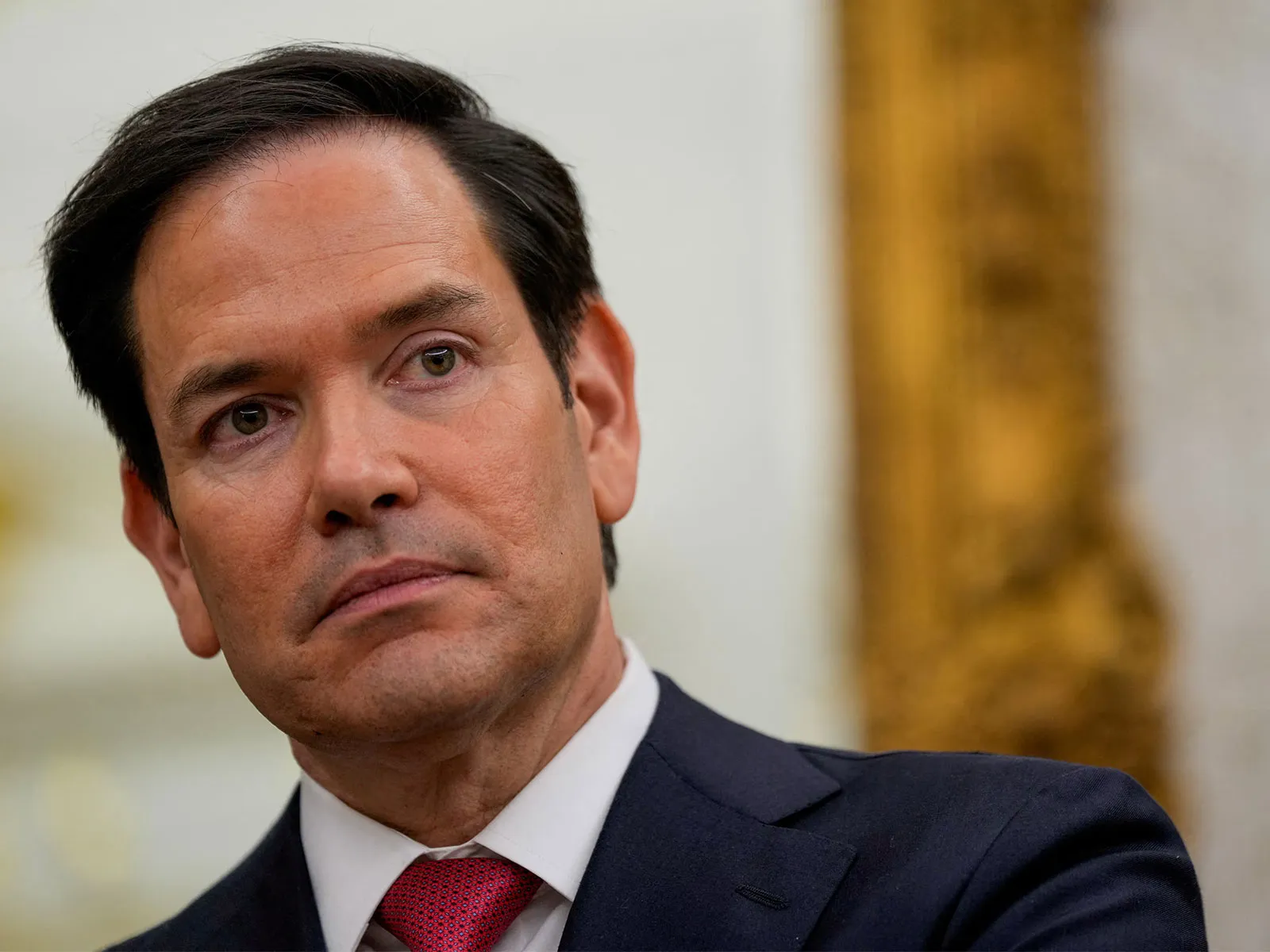
Helsingborg [Sweden], May 22 : Asserting Washington’s firm stance on global maritime security, US Secretary of State Marco Rubio has redoubled pressure on Tehran, identifying its aggressive manoeuvres in vital trade corridors as a non-negotiable hurdle in ongoing diplomatic discussions.
Rubio, who is in Helsingborg, Sweden, highlighted that ensuring unhindered freedom of navigation remains a primary objective for the international community.
Rubio said another major issue to be addressed in negotiations is Iran’s position on the Strait of Hormuz. The top American diplomat exposed Tehran’s efforts to institutionalise its maritime restrictions by seeking regional partnerships to legitimise commercial shipping levies.
He said Iran is “trying to create a tolling system” and to convince Oman to join the system. Condemning the strategy as an unacceptable breach of international maritime law, Rubio issued a stern warning against compliance with the blockaded waterway’s proposed transit fees.
“There is not a country in the world that should accept that,” Rubio said. The explicit warning comes as the US Secretary of State told reporters at the NATO foreign ministers’ gathering in Sweden that unilateral disruptions to energy and cargo lifelines will not be tolerated.
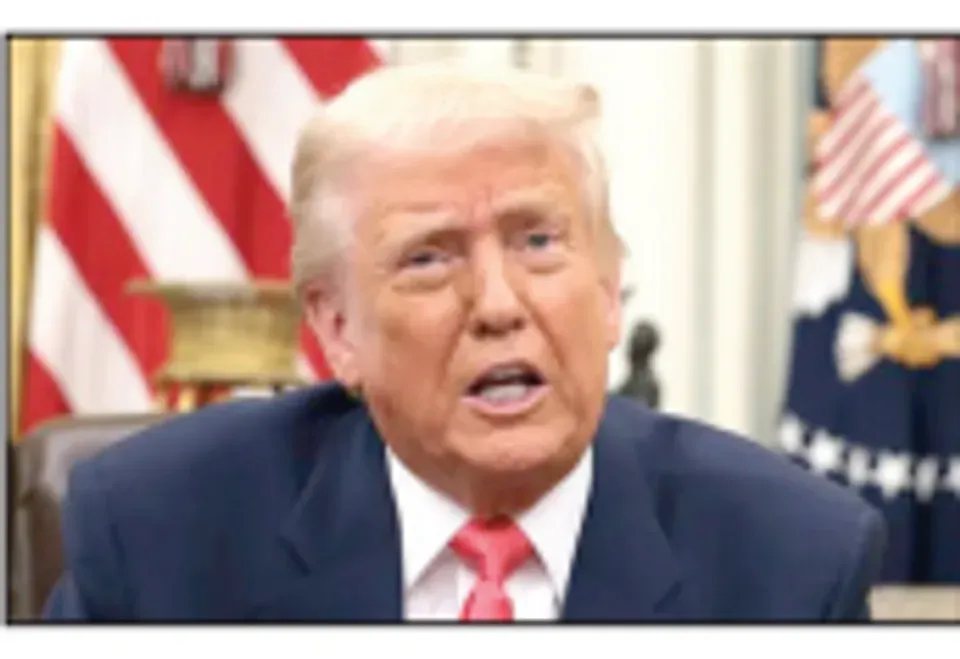
Reinforcing this unyielding stance from Washington, US President Donald Trump on Thursday asserted that the American military maintains a dominant position over critical maritime corridors in the Middle East, whilst issuing a stern warning to Tehran regarding its nuclear ambitions and the recovery of its specialised atomic material.
Speaking from the White House, Trump explicitly backed the robust maritime restrictions enforced by US forces, stating, “We have total control of the Strait of Hormuz with our blockade. Iran will not get nuclear weapons or we’ll do something drastic.” Beyond maritime transit, the nuclear dimension remains a major fault line.
The US President on Thursday reaffirmed Washington’s unyielding position against allowing Tehran to keep its highly refined nuclear stockpiles, which American authorities suspect were moved to subterranean facilities following joint US and Israeli aerial bombardments nearly a year ago.
Stressing American determination to neutralise this underground threat, Trump made the administration’s intentions clear. “We will get it. We don’t need it, we don’t want it.
We’ll probably destroy it after we get it, but we’re not going to let them have it,” Trump reiterated. The stakes behind this demand are immense, as estimates suggest that Iran possesses an estimated 900 pounds of highly enriched uranium, a quantity viewed by experts as ample for potential weapons application if processed further.
Securing or dismantling this specific cache stands as a core pillar of the Trump administration’s strategic framework for dealing with Tehran. Consequently, this nuclear standoff has significantly exacerbated geopolitical friction around the vital maritime trade lane, where the US military continues to maintain its strict naval encirclement to enforce compliance.
Stressing the impact of these ongoing military operations on the blockaded trade route, Trump on Thursday claimed the blockade had been “100 per cent effective” and described it as a “steel wall” preventing vessels from moving freely through the strategic corridor.
Simultaneously, the US President maintained that Washington’s ultimate objective is to restore unfettered, fee-free passage through the critical chokepoint for global commerce, directly countering Tehran’s revenue-generation plans.
Stating the American position on Thursday, Trump noted, “We want it free, we don’t want tolls. It’s international; it’s an international waterway.” However, the American demands have met severe domestic resistance within Iran amid these delicate diplomatic manoeuvres, threatening to derail the process.
Reuters reported, citing two Iranian sources, that Iran’s Supreme Leader Ayatollah Mojtaba Khamenei had ordered that the stockpile of enriched uranium “should not leave the country”, effectively turning down a pivotal American prerequisite in the active peace negotiations.
Amid this high-stakes diplomatic deadlock over both maritime access and nuclear sovereignty, regional players continue to engage in mediation efforts to find a breakthrough. Marco Rubio also referred to a visit by Pakistan’s army chief to Tehran as part of ongoing diplomatic efforts, saying, “Hopefully that’ll advance this further.”
Providing deep context to Rubio’s warnings about regional partnerships, a New York Times report revealed that Tehran is engaged in low-profile discussions with Muscat regarding a proposal to levy transit fees on commercial shipping lines operating within vital West Asian maritime corridors.
According to the report, Iran is quietly negotiating with the Gulf state of Oman over a plan to charge vessels for passing through the Strait of Hormuz, a move that puts Tehran on a direct collision course with US President Donald Trump even as both sides claim to be working towards a diplomatic resolution.
The details suggest that beneath the surface of ongoing diplomatic engagements, a more structured economic framework is being considered for the vital shipping passage.
Behind the public posturing of ceasefire declarations and diplomatic overtures, Iran and Oman have been holding discussions over a system that would generate revenue from one of the busiest and most consequential shipping lanes on earth — the Strait of Hormuz.
This financial strategy outlines a collaborative economic blueprint between the two nations, introducing fresh complexities to the geopolitical dynamic. The talks, confirmed by two Iranian officials to The New York Times, centre on a proposed arrangement in which vessels transiting the Strait of Hormuz would be charged fees, with Oman receiving a share of the proceeds.
Despite initial reservations regarding potential international friction, Muscat’s perspective on the maritime framework appears to have shifted due to projected revenue streams.
Oman, which shares a coastline with the Gulf of Oman adjacent to the strait, was initially cool to the idea but has since warmed to it considerably, having calculated the potential financial upside of participation. (ANI)