PhD Completed, Exploitation Begins: India Wants World-Class Researchers but Pays Them Like Casual Workers
Prof. R.K. Uppal. [PhD, D.Litt.]
A PhD is supposed to be the highest symbol of academic achievement. It represents years of study, research, experimentation, writing, rejection, revision and intellectual struggle. It demands patience, discipline and a commitment to creating new knowledge. Yet, for thousands of highly qualified scholars, completing a PhD does not necessarily bring professional security, financial dignity or academic freedom. Instead, it can mark the beginning of another struggle—the struggle for a decent salary, stable employment and recognition. India wants world-class researchers, but does it want to pay them like world-class professionals? This contradiction deserves serious national attention.
India frequently speaks about becoming a knowledge economy, building a research-driven nation, promoting innovation and competing with advanced economies. Universities are encouraged to increase research output, publish papers, secure patents, attract students and contribute to national development. But behind these ambitious objectives are teachers and researchers who often work under intense pressure for salaries that do not adequately reflect their qualifications, workload or responsibilities.
A person who spends five or more years pursuing doctoral research does not merely acquire another certificate. A PhD represents specialized expertise. The researcher learns to identify problems, analyses evidence, develop arguments, conduct independent investigation and generate knowledge. Such individuals should be treated as valuable intellectual capital. Unfortunately, in many academic workplaces, qualification and compensation do not move together.
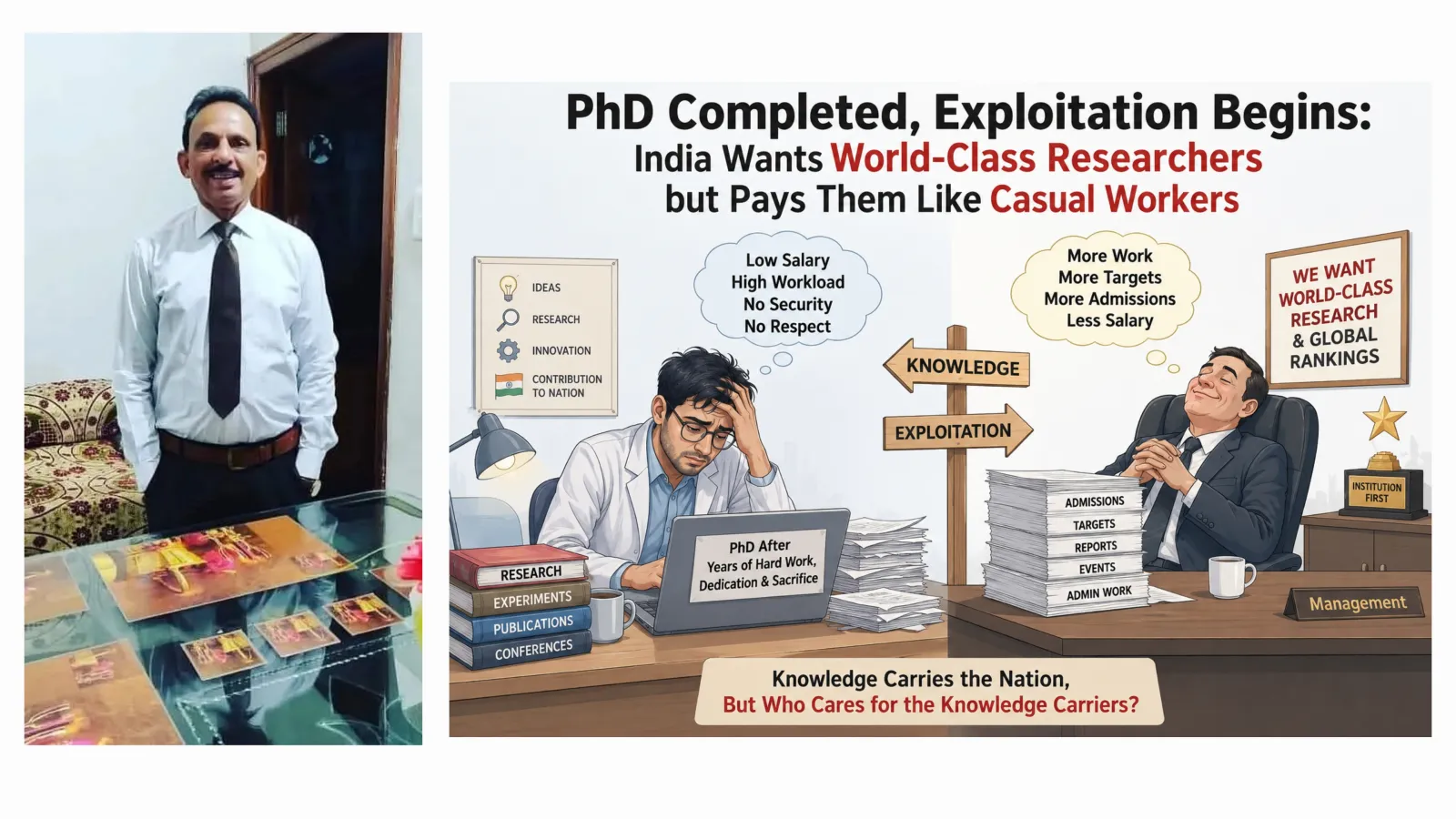
A PhD holder may be expected to teach several courses, supervise dissertations, publish research papers, attend meetings, prepare documentation, participate in admissions, organize events, complete administrative assignments and meet institutional targets. In some institutions, academics are also expected to contribute to student recruitment, promotional activities and other responsibilities far removed from their core academic role.
The question is simple: Can world-class research emerge from an environment where researchers are continuously overworked and economically undervalued?
The problem becomes even more serious when institutions treat highly qualified academics as inexpensive labour. The language of “experience,” “exposure,” “future opportunities” and “academic commitment” can sometimes become an excuse for offering inadequate compensation. Passion for teaching and research should never become a justification for exploitation.
Academics have families, financial commitments and professional aspirations. They require decent salaries just like professionals in other sectors. Intellectual work is work. Research is work. Teaching is work. Mentoring students is work. Academic administration is work. A PhD does not eliminate the need for a livelihood.
There is another disturbing consequence of underpaying researchers: talented young people may begin to avoid academic careers altogether. If highly educated scholars observe that years of doctoral study led to uncertain employment and low financial returns, many will understandably choose careers outside academia. Some may move abroad. Others may enter corporate employment, government services or unrelated professions.
This creates a dangerous cycle. India invests in educating talented people, but inadequate academic opportunities may push those talents away from universities. The country then complains about a shortage of high-quality researchers and globally competitive institutions. If India wants to retain its intellectual talent, it must make academic careers attractive.
This does not mean every PhD holder should automatically receive a high salary. A doctoral degree alone cannot guarantee exceptional compensation. Academic pay should also consider teaching quality, research contribution, innovation, experience, institutional responsibility and performance. But there must be a fundamental principle of fairness and dignity.
A PhD holder should not be expected to perform the responsibilities of a senior academic while being compensated at a level that barely reflects professional qualifications.
The issue is particularly important in the expanding private higher-education sector. Private institutions have played an important role in increasing access to higher education, but growth must not come at the expense of faculty welfare. Universities and colleges cannot build their reputation solely through buildings, advertisements, rankings and admission numbers. Their greatest asset is their faculty. A university without respected and adequately supported teachers is only an infrastructure project—not a knowledge institution.
Faculty members should be given transparent employment contracts, reasonable workloads, timely salaries, opportunities for professional development, research support and academic freedom. Institutions should also establish clear salary structures and promotion policies so that academics know how their careers can progress.
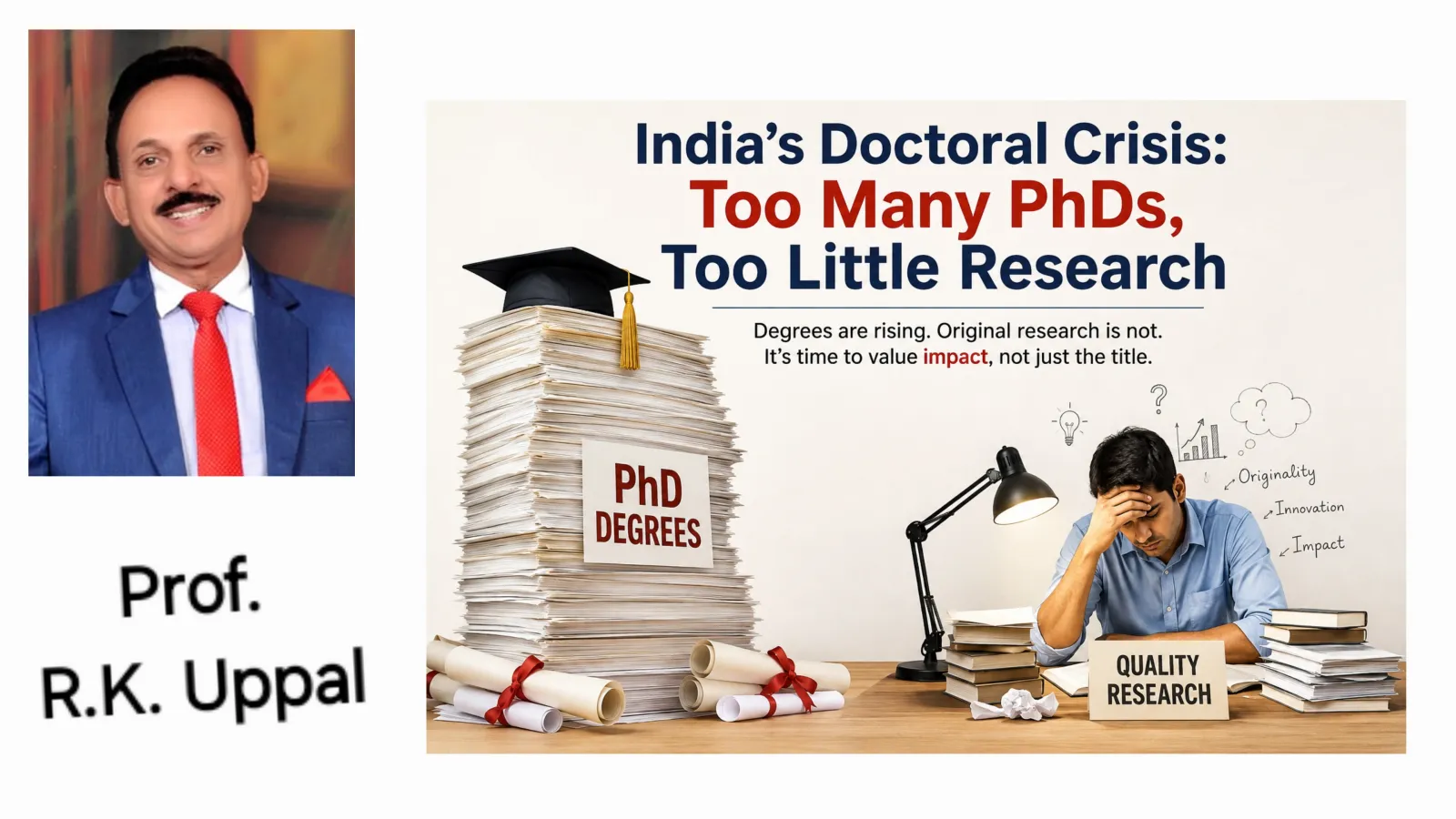
There is also a need to rethink the obsession with quantity. Counting publications, conferences, admissions and administrative targets cannot be the only measure of academic success. Research should be judged by originality, relevance, quality and impact. Teaching should be judged by learning outcomes and student development. Academic excellence cannot be reduced to numbers on a spreadsheet.
The government and higher-education regulators also have a responsibility. Policies encouraging research and innovation must be accompanied by mechanisms that strengthen the academic workforce. Funding should reach researchers and institutions efficiently. Young scholars should have pathways from doctoral research to stable academic and research careers.
India cannot simultaneously demand global research standards and local-level compensation.
The contradiction is becoming increasingly difficult to ignore. If researchers are expected to produce internationally competitive work, they need internationally competitive research environments. If teachers are expected to shape future generations, they need professional dignity. If universities want innovation, they must give academics the time, resources and security required to innovate.
Most importantly, society needs to change its attitude toward academic work. Teaching is sometimes treated as a noble profession, but nobility should not mean economic sacrifice without limits. Researchers are often praised for their contribution to society while their material circumstances are overlooked. Respect without remuneration is incomplete respect.
The purpose of higher education is not merely to produce degrees. It is to create knowledge, develop critical thinkers, solve social and economic problems and prepare future generations. PhD holders are central to this mission.
Therefore, India must ask a difficult question: What kind of knowledge economy are we building if the people producing knowledge cannot build secure lives for themselves?
The answer requires more than speeches about innovation and Viksit Bharat. It requires institutional reform, fair compensation, professional respect and accountability. A PhD holder carries much more than a degree. They carry knowledge, expertise, responsibility and expectations. But they should not have to carry the additional burden of exploitation. India cannot demand world-class researchers while offering them third-class working conditions.
If we truly want world-class universities, we must first create world-class conditions for the people who teach, research and innovate within them. Stop celebrating PhDs only at convocations. Start valuing PhD holders in the workplace. Because a nation that wants to become a knowledge superpower must understand one fundamental truth: You cannot build a world-class knowledge economy by underpaying the people who create its knowledge.