Dr. R. K. Uppal, Professor Emeritus [PhD, D.Litt.]
…….………………………………………………………
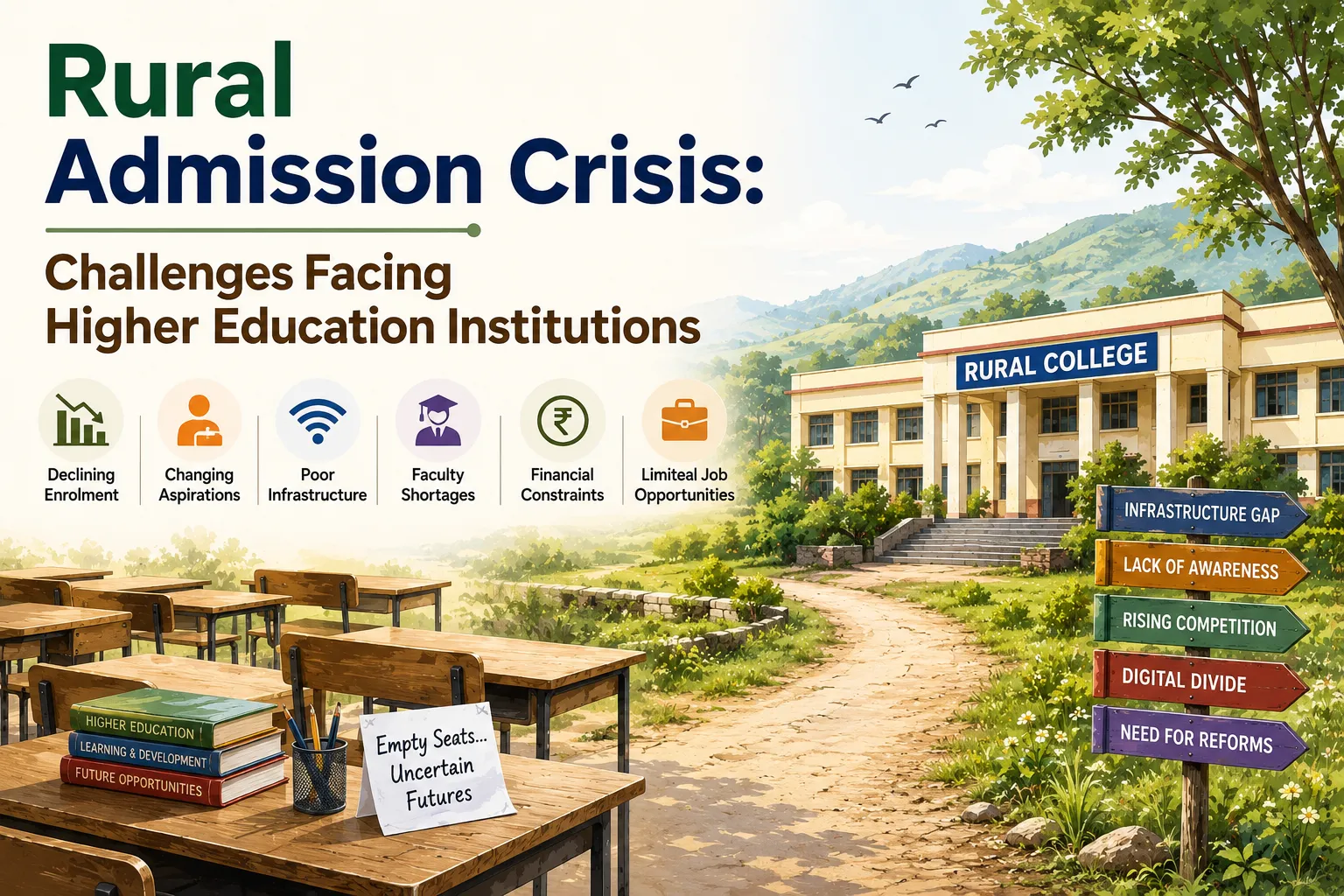
India's higher education sector has expanded rapidly over the last few decades, with new universities and colleges established to meet the growing demand for quality education. Yet, behind this impressive growth lies a disturbing reality: many Higher Education Institutions (HEIs) in rural areas are struggling to attract students. Empty classrooms, declining enrolments, and mounting financial pressures have become common features of rural colleges. The rural admission crisis is emerging as a significant challenge that threatens the goals of educational equity, social inclusion, and balanced regional development.
Rural HEIs have historically played a crucial role in democratizing higher education. They have provided affordable and accessible educational opportunities to students from economically weaker sections, farming families, first-generation learners, and marginalized communities. For many rural youth, local colleges represent the only practical pathway to higher education. Therefore, declining admissions in these institutions are not merely an institutional issue but a matter of national concern.
One of the primary reasons for falling admissions is the changing aspirations of rural students. Today's youth seek education that promises better employment opportunities and social mobility. Urban colleges and private universities are often perceived as offering superior infrastructure, modern teaching methods, industry exposure, and stronger placement prospects. Consequently, many students are willing to migrate to cities for higher education despite the additional financial burden.
The rapid expansion of private higher education institutions has intensified competition. Private universities actively market their programmes through advertisements, social media campaigns, scholarships, and attractive campus facilities. They offer professional and industry-oriented courses that align with emerging job markets. In comparison, many rural colleges continue to depend on traditional programmes with limited innovation and outreach.
Faculty-related issues also contribute to the admission crisis. Delays in faculty recruitment, dependence on contractual teachers, and limited opportunities for professional development affect academic quality. Students and parents often evaluate institutions based on the availability of qualified and experienced faculty members. A shortage of permanent teachers can undermine confidence in rural colleges.
Economic constraints continue to influence educational decisions. Although rural colleges generally charge lower fees, many families face financial difficulties that make higher education unaffordable. Rising costs of transportation, study materials, and accommodation can discourage enrolment. In some cases, students choose immediate employment or short-term vocational training over traditional degree programmes. Female students often encounter additional social and financial barriers that limit their educational opportunities.
Employment prospects have become a critical factor in students' choice of institutions. Parents increasingly expect higher education to lead directly to stable and rewarding careers. Many rural HEIs lack strong industry partnerships, placement cells, internship programmes, and career counseling services. The absence of structured career support creates a perception that degrees from rural colleges have limited economic value.
The implementation of the National Education Policy (NEP) 2020 offers both hope and challenges for rural HEIs. The policy promotes multidisciplinary education, flexible curricula, skill development, academic mobility, and technology integration. However, effective implementation requires substantial investment in infrastructure, faculty training, and institutional capacity building. Without adequate financial and administrative support, rural colleges may struggle to realize the policy's objectives.
The consequences of declining admissions extend beyond educational institutions. Rural HEIs contribute significantly to local economic development by generating employment and supporting small businesses. They serve as centres of cultural exchange, social progress, and community development. Weakening of these institutions could accelerate rural-to-urban migration and widen regional inequalities in educational opportunities.
Addressing the rural admission crisis requires a comprehensive strategy. First, rural HEIs must diversify their academic programmes by introducing skill-based and employment-oriented courses aligned with local and national economic needs. Programmes in sustainable agriculture, food processing, rural entrepreneurship, healthcare, renewable energy, and digital technologies could attract students while contributing to regional development.
Second, governments should invest in modern infrastructure. Upgraded laboratories, digital libraries, high-speed internet, smart classrooms, and student support services can significantly improve the learning environment. Digital technology should be integrated into teaching while ensuring that rural students are not disadvantaged by connectivity gaps.
Third, faculty recruitment and development need urgent attention. Regular appointments, continuous training, research opportunities, and incentives for serving in rural institutions can enhance academic quality and institutional reputation.
Fourth, stronger collaboration between colleges, industries, and local communities is essential. Internship programmes, apprenticeship opportunities, entrepreneurship development centers, and partnerships with local businesses can improve students' employability and practical skills.
Career guidance and placement support should become integral components of rural higher education. Dedicated placement cells, alumni networks, and career counseling services can help students make informed decisions and improve employment outcomes.
Financial assistance must also be strengthened. Scholarships, fee waivers, transportation support, and special incentives for economically weaker sections and female students can reduce barriers to higher education and encourage enrolment. Community engagement can further enhance the relevance of rural HEIs. Colleges should actively participate in local development through extension activities, digital literacy campaigns, farmer training programmes, health awareness initiatives, and community-based research projects. Such efforts can strengthen public trust and reinforce the institution's role in rural society.
The rural admission crisis is a warning that expanding higher education infrastructure alone is insufficient. Institutions must remain relevant, accessible, and responsive to the changing needs of students and society. Empty seats in rural colleges represent untapped human potential and missed opportunities for national development. The future of India's higher education system depends not only on world-class universities in metropolitan cities but also on vibrant and sustainable rural institutions. Revitalizing rural HEIs through innovation, investment, and inclusive policies is essential for achieving the goals of NEP 2020 and ensuring that higher education remains a powerful instrument of social transformation. Filling the empty seats in rural colleges is, ultimately, about securing the future of rural youth and building a more equitable and prosperous India.