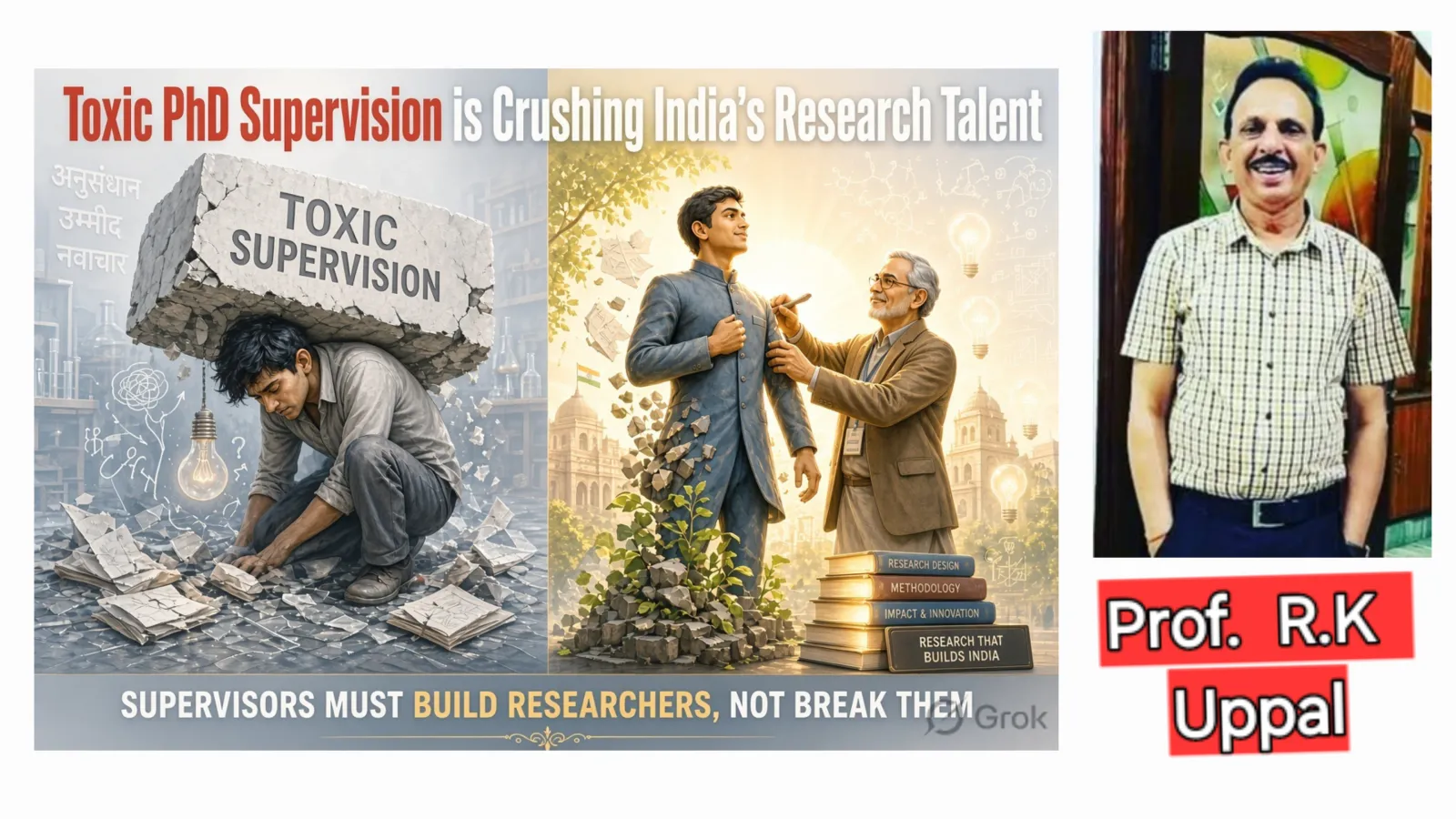
Toxic PhD Supervision is Crushing India’s Research Talent
Supervisors Must Build Researchers, Not Break Them
Prof. R.K. Uppal
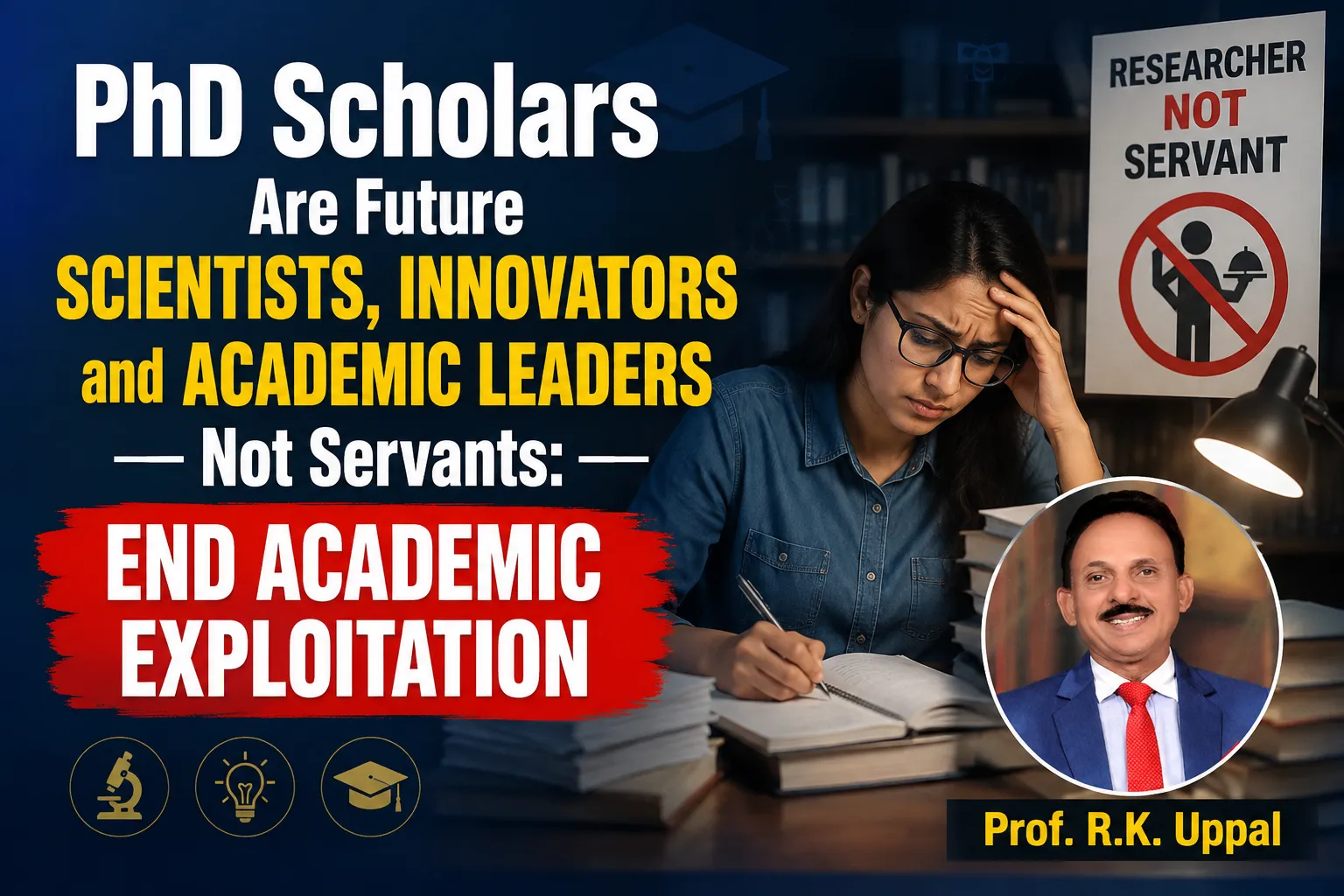
A PhD is not merely an academic qualification; it is a transformative journey through which a young scholar learns to question, investigate, innovate and contribute new knowledge to society. At the centre of this journey stands the research supervisor. A good supervisor can inspire a struggling scholar to become an outstanding researcher, while an insensitive or authoritarian supervisor can destroy confidence, creativity and even the desire to continue research. Therefore, PhD supervision must be understood not simply as an administrative responsibility but as a profound academic and human responsibility.
The relationship between a PhD scholar and supervisor is inherently unequal. The supervisor often controls research direction, progress assessments, recommendations, publications and, in many cases, the scholar’s academic future. Such authority must be exercised with maturity, fairness and compassion. Unfortunately, there are instances where supervision becomes a relationship of fear rather than mentorship. Excessive criticism, humiliation, unnecessary delays, intimidation, unreasonable demands and suppression of independent ideas can create an unhealthy research environment. When academic authority is misused, the purpose of doctoral education is defeated.
A researcher does not become innovative by being constantly frightened. Innovation requires intellectual freedom, confidence and the courage to ask difficult questions. If scholars are afraid that disagreement with their supervisors will negatively affect their thesis or academic career, they may simply follow instructions rather than develop independent thinking. The result can be technically completed PhDs but weak researchers.
A supervisor’s primary responsibility should be to build intellectual capacity. Supervisors should encourage scholars to read widely, challenge established theories, examine evidence critically and develop their own research perspectives. A PhD thesis should not become a supervisor’s personal project in which the scholar merely follows orders. The scholar must gradually develop into an independent researcher capable of designing studies, analyzing evidence and defending conclusions.
Compassion, however, does not mean lowering academic standards. A compassionate supervisor can be demanding while remaining respectful. Poor research should be criticised, but criticism should focus on the work rather than attacking the individual. Mistakes are an essential part of research. Every researcher encounters rejected papers, unsuccessful experiments, methodological problems and disappointing results. A supervisor should help a scholar learn from these setbacks rather than make the scholar feel incapable or worthless.
Another important issue is academic freedom. Supervisors should encourage scholars to develop evidence-based arguments even when those arguments differ from the supervisor’s own views. A PhD is supposed to contribute something new to knowledge. If supervisors demand intellectual conformity, originality becomes impossible. The best supervisors do not create copies of themselves; they create researchers who can eventually surpass them.
Supervisors should also recognize that every scholar is different. Some students require greater methodological guidance, while others need encouragement to become more independent. Some may progress rapidly, while others require additional time to understand sophisticated concepts. Effective supervision therefore requires patience and individual attention rather than a one-size-fits-all approach.
Universities also have a responsibility. They should not judge doctoral education solely by the number of PhDs awarded. The real measure should be the quality, originality and impact of the research produced. Regular supervisory reviews, scholar feedback mechanisms, transparent grievance systems and training programmes for supervisors can strengthen doctoral education. Supervisors should receive professional development in research ethics, mentoring, communication and conflict resolution—not merely research methodology.
There is also a strong case for making the PhD process more transparent. Research milestones, expectations, publication requirements and evaluation procedures should be clearly communicated to scholars. Decisions affecting a scholar’s progress should not depend entirely on personal relationships or arbitrary supervisory discretion. Institutional safeguards can protect both supervisors and scholars from misunderstandings and unfair practices.
A successful supervisor should celebrate the achievements of scholars rather than view their success as a threat. When a former PhD scholar publishes internationally, develops a new technology, becomes a professor, enters industry or makes a meaningful contribution to society, that is the supervisor’s greatest academic legacy. The true success of a supervisor is not how dependent scholars remain, but how independently they can succeed.
India needs a strong research ecosystem if it is to become a knowledge-driven and innovation-oriented economy. Universities cannot build that ecosystem through laboratories and policies alone. They need a culture in which young researchers are respected, encouraged and intellectually challenged. The supervisor-scholar relationship is one of the foundations of that culture.
It is time to move from the traditional image of the supervisor as an unquestionable authority to the modern concept of the supervisor as a mentor, facilitator, critic and intellectual partner. Authority should be accompanied by responsibility, and expertise should be accompanied by empathy.
A PhD scholar may forget many technical details learned during doctoral research, but will remember how a supervisor treated them during their most challenging years. A few words of encouragement can transform a researcher’s confidence, while repeated humiliation can permanently damage it.
India does not need PhD factories producing degrees without meaningful impact. It needs researchers capable of solving real economic, technological, social and environmental problems. Such researchers emerge when universities combine rigour with respect, accountability with fairness, and high standards with compassion.
The Supervisors must build researchers, not break them. They must cultivate curiosity rather than fear, independence rather than dependence, and confidence rather than insecurity. A supervisor’s greatest achievement is not the number of theses completed under their name, but the number of capable, ethical and independent researchers they helped create. Build the researcher. Strengthen the mind. Protect curiosity. Encourage originality. That is what true PhD supervision should mean.