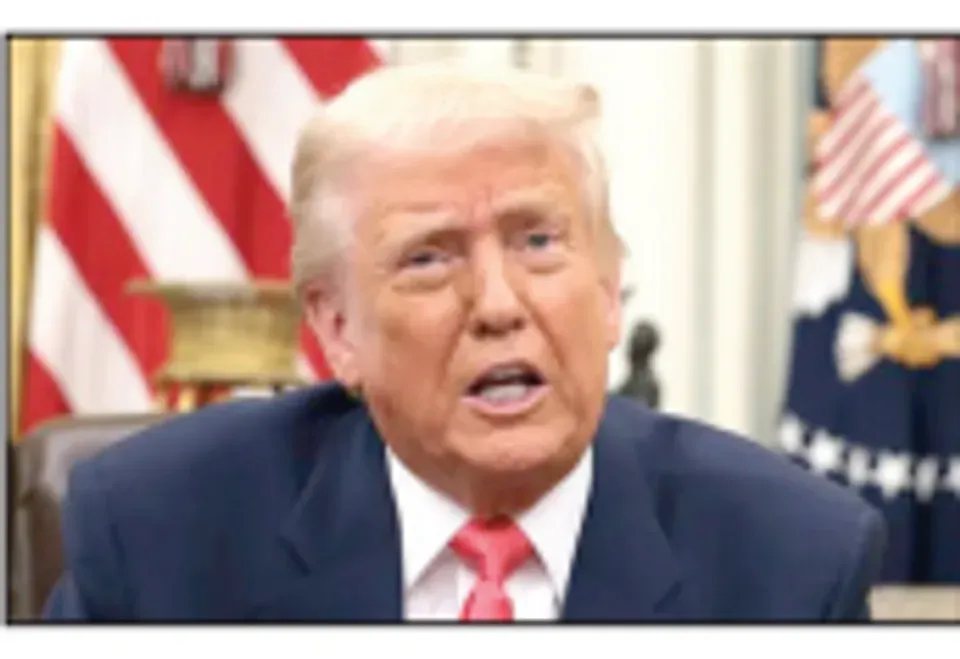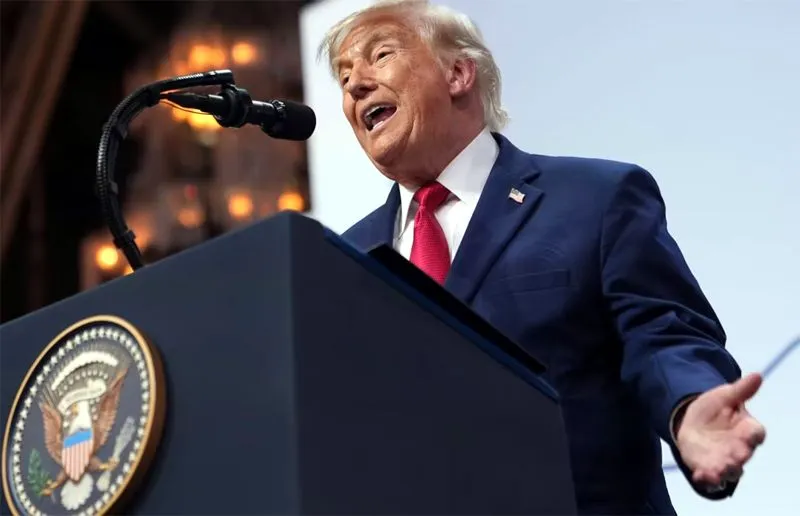
WASHINGTON, June 18: After signing the "Islamabad Memorandum of understanding" (MOU), President Donald Trump defended the 14-point MOU that ends the war with Iran, even as he suggested it may not be "permanent" during a press conference from the Group of Seven (G7) summit in vian-les-Bains, France.
The president noted other G7 members backed the end of the war, arguing it was time for the conflict to end.
He said, "The war needed to end because of dangers to the global oil supply, even as he suggested new military action could take place against Iran."
The deal sets up a 60-day period of new negotiations on Iran's nuclear programme, the issue that triggered U.S. and Israeli attacks on Iran earlier this year.
Trump repeatedly stressed that the agreement is not permanent and could collapse if Iran fails to comply with its terms, even suggesting that renewed military strikes remain an option.
"If they don't honour the agreement, or some things aren't even mentioned in the agreement, it's a memorandum of understanding, but we have an understanding of certain things without writing it," Trump told reporters.
"If they don't honour that, we'll probably go back to bombing them until they honour it," he continued, adding, "It's amazing what bombs can do."
Trump's comments echoed ones he made earlier Wednesday in which he threatened to bomb Iran "if they don't behave".
The president also emphasised to reporters that the memorandum was not final.
"No, it's not final. It's a memorandum of understanding, and if I don't like it, we'll go back to shooting at them, dropping bombs on their head," he said.
Trump and Vice President Vance electronically signed the preliminary deal to reopen the Strait of Hormuz on Sunday. The president said Wednesday that the formal, in-person signing could take place Thursday or Friday.
Trump took a victory lap at the summit as G7 leaders expressed support for the deal in individual statements and a joint communique.
Many appeared to be relieved that the MOU would lead to a reopening of the Strait of Hormuz, through which 20 per cent of the world's oil supply flows.
Trump lauded the statements, arguing they reflected the value of the deal that was negotiated.
"They all put out statements saying they love this deal because they want to see it," Trump said, "and they love the fact that the Hormuz - don't forget, if we were going to drop bombs, it could be another three months what do you have left, maybe nothing But the strait would never be opened."
Trump dismissed a reporter's question over whether any of the G7 leaders expressed concern to him that the U.S. violated international law by launching strikes against Iran. Officials in Germany, Italy and France - members of the G7 - initially criticised the war as violating international law.
"No, no, actually the opposite. They felt they [Iran] were very dangerous," Trump responded.
"They were very relieved because they could get hit too. No, we never discussed that. No, it would be the opposite."
The president defended letting Tehran have its arsenal of ballistic missiles, saying it will be one of the issues not related to Iran's nuclear programme that the U.S. will work on with Persian Gulf allies.
He framed the deal as a pragmatic step to stabilise global energy markets, particularly due to risks surrounding the Strait of Hormuz, while emphasising that it only opens a pathway to future negotiations rather than guaranteeing peace.
A central element of the agreement is a 60-day negotiation period focused on Iran's nuclear programme, which was the core trigger of earlier U.S. and Israeli military actions.
During this time, both sides are expected to maintain the status quo while negotiating a more comprehensive settlement. The deal also includes phased steps such as the lifting of naval restrictions, easing of sanctions, and restoration of limited economic activity, particularly Iran's ability to resume oil exports.
These measures are designed to create immediate economic incentives while keeping leverage for further negotiations.
A major geopolitical component of the MOU is the reopening and stabilisation of the Strait of Hormuz, a critical global shipping route through which a significant portion of the world's oil supply flows. Trump argued that restoring maritime traffic is essential to prevent global energy shortages and rising oil prices, warning that continued conflict could severely disrupt global supply chains. The agreement also envisions Iran temporarily allowing toll-free passage for commercial shipping while longer-term arrangements are negotiated with regional states.
Economically, the MOU proposes sweeping incentives for Iran, including sanctions relief, access to frozen financial assets, and a large-scale reconstruction and development package reportedly valued at up to $300 billion. These provisions are intended to encourage Iranian compliance during negotiations while reintegrating the country into the global economy. However, many of these commitments are contingent on progress in talks and are structured to be reversible depending on Iranian actions.
Politically, Trump highlighted divisions with Israeli Prime Minister Benjamin Netanyahu over regional military strategy, particularly regarding strikes in Lebanon involving Hezbollah. While reaffirming support for Israel's security, Trump urged restraint and softer military responses, signalling diverging priorities between Washington and Jerusalem during the negotiations.
Finally, the agreement introduces an enforcement and legitimacy mechanism that would require endorsement by the United Nations Security Council for any final deal. This step is intended to make the agreement more durable and internationally binding, reducing the likelihood of unilateral withdrawal by future governments.
Overall, the MOU functions as a temporary de-escalation and negotiation framework that ties military restraint, economic relief, and nuclear diplomacy into a tightly conditional but highly uncertain pathway toward a final settlement.(UNI)