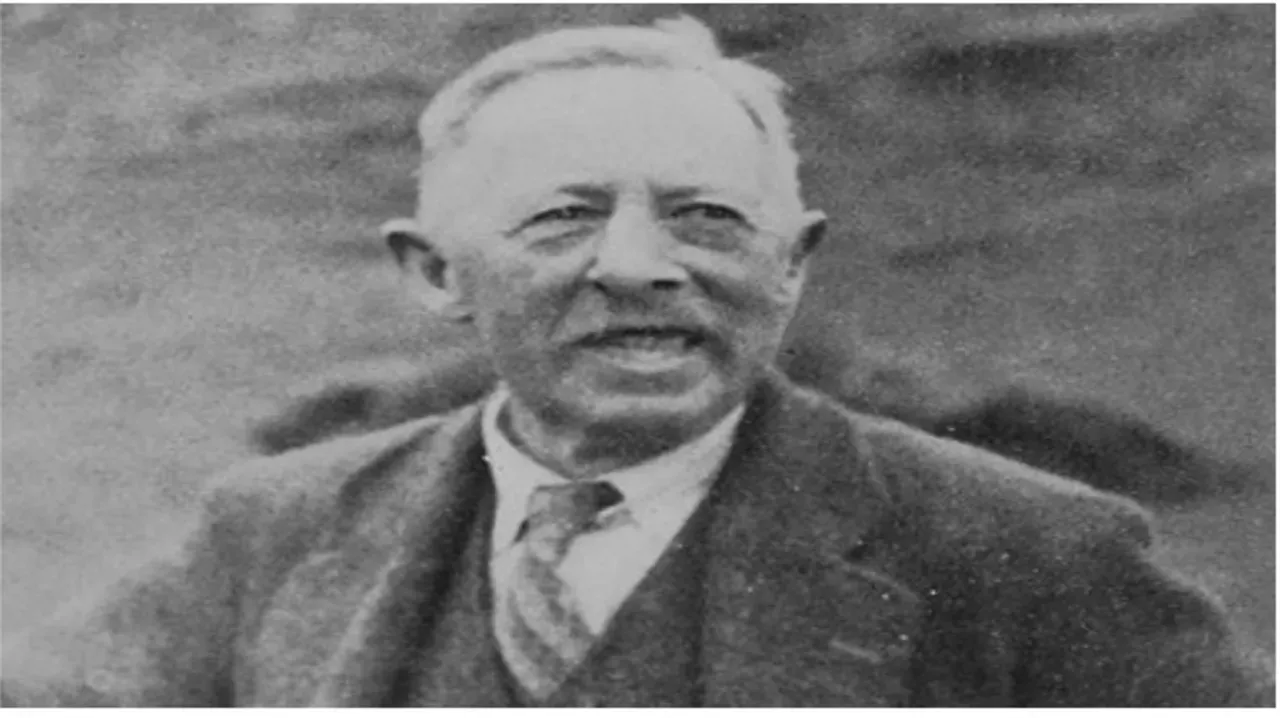
It was an ordinary autumn afternoon in 1891, when something small but stubborn arrived in Srinagar inside the luggage of a man named Cecil Earle Tyndale Biscoe. It was a football that most of the boys at Mission School, Fateh Kadal, had never seen, and, being made of leather, the Pandit students felt it was unholy. Playing football meant running and sweating in public, and schools were meant only for examinations and future government jobs, with games seen as a waste of time by most of the parents at that time.
Biscoe had a firm belief that physical sports were essential for building character, so he had begun challenging local customs around work, swimming and rowing, though listening but not yielding to all the voices. He wanted to turn “bundles” of boys into active, courageous young men capable of service and fair play and football with its demands for teamwork, discipline and courage, fitted his vision perfectly.
History is full of accounts wherein C E Tyndale Biscoe stood upfront to ensure that the football gets its due share at least in his school premises. Despite the severe oppositions like parents writing angry letters, boys puncturing balls, local newspaper criticism and other hurdles created in the development of football in particular, Biscoe stayed present at every match during the first year, determined to give the game a chance to take root. He fought a hard battle of popularization of the game of football among the different sections of traditional society in Kashmir.
Slowly, football spread beyond the boundaries of Mission School to other schools and institutions of the region who started to adopt it. By the 1920s, Biscoe watched inter-class matches played with real sportsmanship, refereed by the boys themselves. It was the time when the game had begun to belong to Kashmir, its favourite destination.
The decades that followed showed how firmly the roots had grown as the Jammu and Kashmir first participated in the Santosh Trophy in 1964, with Srinagar hosting the same prestigious tournament later in 1978-79 and again in 2007-08. Since then, the Valley has produced numerous invaluable icons of the game, including players like Mohamad Yousuf Dar, Abdul Majeed Kakroo, Mehrajuddin Wadoo and Ishfaq Ahmed. The local talent from the valley has reached all major Indian football clubs like Mohun Bagan, East Bengal and Mohammedan Sporting.
Today, football pulses with life across Kashmir and the official figures suggest the existence of at least 137 registered football clubs, more than 2500 registered players, 247 certified coaches and the eminence of 19 international players from this part of the world. The emergence of professional sides like Real Kashmir FC have captured public imagination across the whole nation with their skill and the warmth they bring to matches. I-League games in Srinagar give young players rare opportunities to test themselves against stronger competition.
The everlasting appeal of the game of football in Kashmir cuts across old divides, with boys and now also girls training with determination, even on cold mornings of Chillay Kalan. Crowds still gather with the same excitement that once followed those early chaotic matches of both stable as well as turbulent times. In a region that has known many difficulties, football offers a shared language of effort, joy and unity. It stands as a reminder that passion for the game can rise above other troubles.
Biscoe’s contribution was never just about introducing a sport, but far beyond the field. Through football, swimming, rowing, and other community services, he confronts entrenched societal ideas about caste, physical work, and what it means to be educated in a very real sense. He maintained that holistic learning requires the integration of physical and cognitive development. The boys who once shied away from the leather ball ended up on the frontlines during floods and epidemics - the real outcome of his teaching approach.
The story of football in Kashmir is therefore the one where patient persistence met local passion, and together they built something enduring. What started as one missionary’s determined experiment against strong cultural resistance is now a genuine part of life in the Valley. From that hesitant first kick in 1891 to packed local matches and big community events, football has come a long way in Kashmir.
Tyndale Biscoe planted the seed of football under difficult conditions, and generations of Kashmiris have watered it, shaped it and made it their own. The leather ball he brought from Bombay no longer belongs to one man. It now carries the hopes, the sweat, and the celebrations of an entire sporting culture - a quiet legacy that still stirs hearts in Kashmir
(The Author is an Alumnus of Tyndale Biscoe School, Associate Prof. at SKUAST-Kashmir)
.