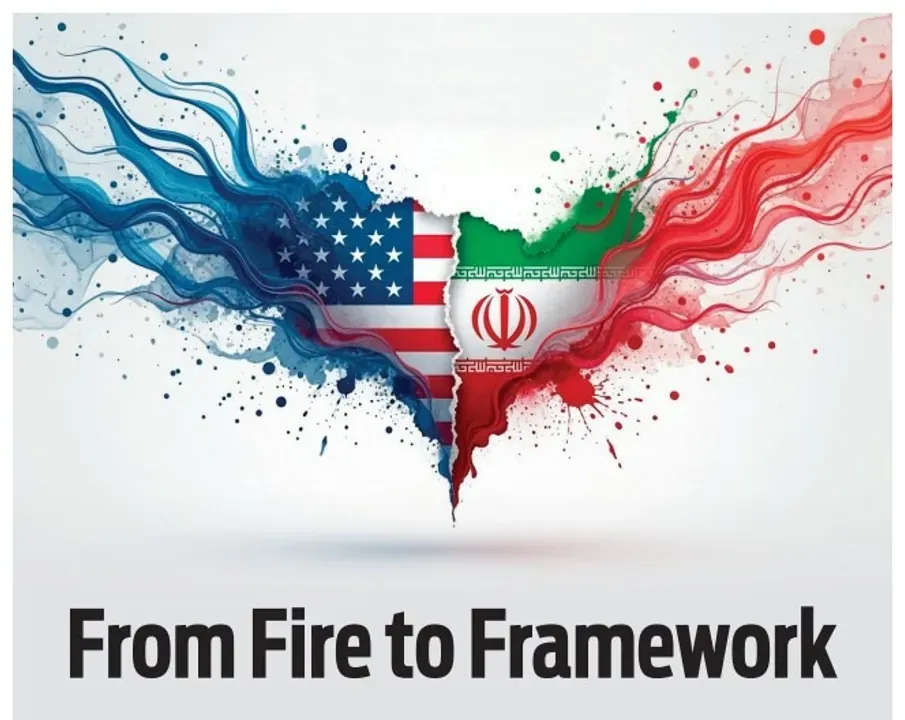
Washington, Jun 18: President Donald Trump signed an agreement with Iran Wednesday that calls for Tehran to dilute its stockpile of highly enriched uranium and waives US-backed sanctions on the country, immediately allowing Iran to sell its oil freely in a major concession from Washington, according to details released by both countries.
The initial deal to end the war takes “immediate effect” after leaders from both countries signed it, Pakistani Prime Minister Shehbaz Sharif, who helped mediate the agreement, said in a post on X.
The agreement calls for a permanent end to hostilities and starts a 60-day negotiating clock to reach a final deal on the future of Iran's nuclear programme, though Trump left the door open to resume attacks.
It appears to offer Iran several benefits up front while extracting little in return.
The deal has been shrouded in secrecy and confusion for days.
US officials refused to disclose the terms even after saying Trump and Vice President JD Vance digitally signed it over the weekend.
Trump signed a physical copy on Wednesday while dining with French President Emmanuel Macron at Versailles, the palace where many historic agreements have been signed over the centuries, ending wars or territorial disputes.
The White House had planned a signing ceremony on Friday in Switzerland, but its fate is now uncertain, with conflicting information from the US, Iran, and Pakistan.
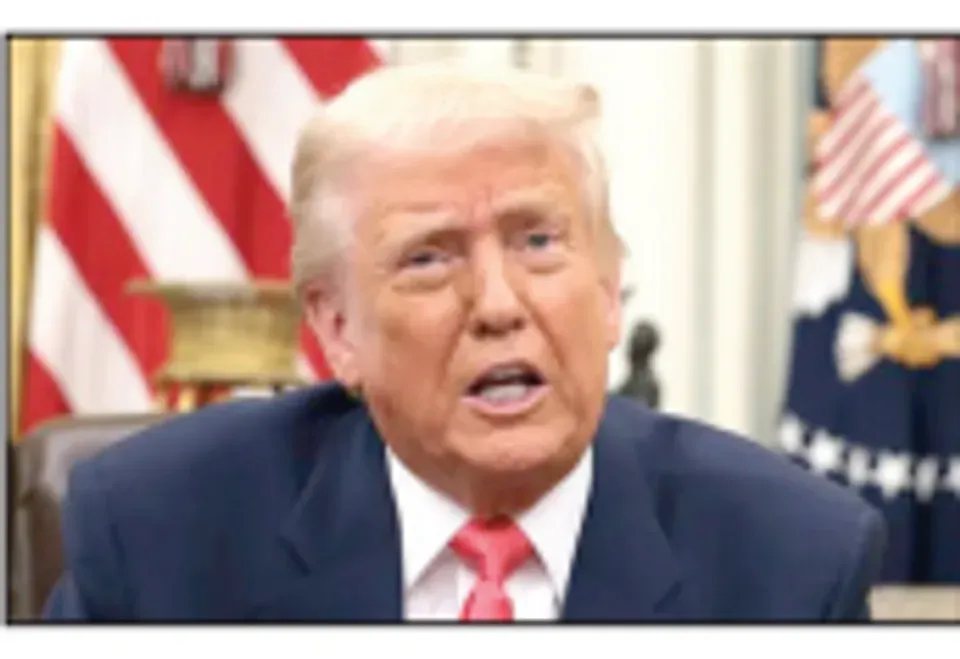
“It's signed,” Trump said as he left the dinner at Versailles, which followed his trip to the Group of Seven summit in France.
In a video posted online by a White House aide, Trump was seen seated at a table next to Macron signing a paper copy of the agreement. Trump then handed the document and pen to Secretary of State Marco Rubio as people in the room applauded.
“This was not easy,” Trump said right before he signed it, according to a video posted to social media by Macron.
In Tehran, a stone-faced President Masoud Pezeshkian signed the deal on behalf of Iran, according to the state-run IRNA news agency, which posted images of him holding up the deal with his signature and Trump's.
Text of the agreement still has not been formally released. US officials dictated draft language to journalists after days of secrecy, speaking on condition of anonymity.
Iranian state TV later released text that largely tracked what the US put out.
Much of the agreement would restore the status quo before the war, including ending hostilities, restarting talks between the US and Iran over Tehran's nuclear programme, and reopening the Strait of Hormuz, the crucial passage for the world's oil and natural gas whose closure created a historic energy crisis.
The agreement opens the strait without tolls for two months, but does not preclude fees in the future, according to the drafts from both countries.
In return, the US will move to waive, but not eliminate, some wide-ranging sanctions against Iran.
The deal also affirms a commitment to Lebanon's territorial integrity in the face of Israel's invasion against the Hezbollah militant group.
That is one of the most delicate parts of the agreement because Israel has maintained it will continue to defend itself and to occupy vast swaths of Lebanon.
Iran has said Israel must withdraw under the deal, a condition Israel has already rejected.
The US and Israel went to war on Feb 28 in part to prevent Iran from ever getting a nuclear weapon.
Trump has cited various goals for the war, including at times vowing it would end Iran's nuclear and missile programmes and its support for Hezbollah and other proxy groups in the region. He also suggested it could lead to toppling the Iranian government.
The interim deal falls short of all those goals, but Trump hailed it Wednesday as “very strong”.
He also opened the door to abandoning it: “It's a memorandum of understanding, and if I don't like it, we'll go back to shooting at them, dropping bombs.”
The US agreement to immediately allow Iran to sell its oil freely and the offer to eventually lift all sanctions represent major concessions that go beyond the terms of Iran's 2015 nuclear deal with world powers.
Trump withdrew America from that Obama-era pact in his first term, declaring it the “worst deal ever”.
The Islamic Republic maintains that its nuclear programme is peaceful.
The accord likely will draw intense opposition in Washington, and it appears to be a major setback for Israeli Prime Minister Benjamin Netanyahu, who has come under criticism at home from the media, his opponents and even some allies as details emerge.
Under the Obama-era nuclear agreement with Iran that Trump pulled out of, Iran also agreed to restrictions on its nuclear programme and promised never to build an atomic weapon.
Some concessions to Iran — including the full lifting of sanctions and the release of frozen assets — would happen gradually and be linked to progress in the nuclear talks, according to officials from Pakistan, a key mediator.
They outlined some of the deal's major points on condition of anonymity because of the sensitivity of the issue.
But in the meantime, the US will issue waivers to sanctions that allow Iran to sell oil freely.
The Islamic Republic's oil export revenues in 2024 were more than $46 billion. Its main buyer of oil, China, is believed to have bought at below-market prices because of its willingness to ignore the sanctions.
Granting oil waivers at the start of the 60-day talks strips the US of a major point of leverage. Only at the conclusion of the overall deal in 2015 were sanctions on Iran's oil lifted.
The interim deal also opens the door to ending all sanctions Iran faces from the US and at the UN — including those over Tehran's weapons programs and human rights abuses — though it says the schedule for that will be worked out later.
Still, that far surpasses the 2015 deal, which only lifted some sanctions in exchange for Iran drastically reducing its enrichment and stockpile of uranium.
The accord would also provide Iran with at least USD 300 billion to rebuild — an extraordinary figure and another major benefit for Iran. The money also appears dependent on the progress of further negotiations.
Vance has said Gulf Arab nations would invest that amount. But Gulf countries would likely be reluctant to help Iran after Iranian attacks in the war destroyed oil facilities and other sites in their territory.
Trump reiterated Wednesday that the US would not contribute and said it was up to other countries if they wanted to invest.
The initial deal provides a major win for the global economy — the reopening of the Strait of Hormuz, the narrow mouth of the Persian Gulf through which a fifth of all traded oil and natural gas once passed before the war began.
Since then, Iranian attacks on shipping and the threat to vessels effectively shut the strait.
The strait's closure drove up energy prices around the world and made many basics, including food, more expensive. Iran let through some vessels that paid tolls, something never done before in the strait, which has long been considered an international waterway.
The US later provided military support to get other tankers out, but traffic was nowhere near levels before the war.
The deal also says the US will lift a blockade imposed on Iranian ports and that the strait will return to its pre-war traffic levels in 30 days, while acknowledging Iranian mines may need to be destroyed.
PAK SIGNS MOU AS MEDIATOR
Pakistan Prime Minister Shehbaz Sharif on Thursday signed the Islamabad Memorandum of Understanding - aimed at restoring peace in West Asia - as the key mediator of the negotiations, his office said.
The document was already signed by US President Donald Trump and Iranian President Masoud Pezeshkian on Wednesday.
Sharif’s signing of the Memorandum of Understanding (MoU) - in which Washington and Tehran are the two main parties - comes a day ahead of a planned ceremony in Switzerland, where key negotiators from the US, Iran, Pakistan and Qatar are expected to gather.
Pakistan has officially signed as a guarantor.
“Prime Minister of Pakistan Muhammad Shehbaz Sharif signed the Islamabad Memorandum of Understanding as a guarantor. Signatures of US President Donald Trump and Iran's President Masoud Pezeshkian are present on the Islamabad Memorandum of Understanding,” Sharif's office said in a post on X.
The Prime Minister's Office on Thursday also shared photographs and videos of him signing the document.
Earlier in the day, Sharif hailed Trump and Iran’s Supreme Leader Mojtaba Khamenei for restoring peace in West Asia, as he announced that the signing of the document will instantly reopen the Strait of Hormuz and the US will immediately lift its naval blockade.
Trump on Wednesday signed the memorandum of understanding at the Palace of Versailles in France, where he had dinner with French President Emmanuel Macron after the G7 summit. Later, Iranian media posted photos of President Pezeshkian holding a copy of the signed document before a camera.
Sharif on Thursday said that the signing of the agreement at the highest level of the respective governments demonstrates the commitment of both sides to a diplomatic resolution of the conflict, as he thanked West Asian countries such as Saudi Arabia, Qatar, Turkiye and Egypt for their contribution.
The peace process was negotiated through mediators that included Pakistan and Qatar, who initially got a two-week ceasefire agreement on April 8. The ceasefire was later extended till the completion of the talks.
Pakistan - which eventually emerged as the key mediator - hosted the first round of peace talks in April, which was attended by senior leaders from both sides, but they failed to clinch a deal.
"I am honoured to announce that the historic 'Islamabad Memorandum of Understanding' has been electronically signed today between the United States of America and the Islamic Republic of Iran," Sharif said in a post on X earlier on Thursday.
He further said: "Islamabad MoU shall enter into force with immediate effect and as a first step, the Islamic Republic of Iran will instantly reopen the Strait of Hormuz and the United States of America will immediately lift the naval blockade.”
The Strait of Hormuz is a narrow waterway through which roughly one-fifth of the world’s total energy supplies pass in normal times. Shipping movements through the strait has been severely disrupted since February 28, when the US and Israel launched joint attacks on Iran, triggering retaliatory strikes. It led to energy crisis in several countries.
Sharif on Thursday offered “heartfelt congratulations and sincere appreciation” to Trump, saying his “steadfast commitment to diplomacy and preference for peaceful resolution have once again helped end a conflict that could have led to devastating consequences for the region and beyond”.
He also praised “the dedication and tireless efforts” of the US negotiating team, including Vice President JD Vance, Special Envoy for West Asia Steve Witkoff and adviser Jared Kushner.
The Pakistani leader expressed “profound respect and appreciation” for Iran's Supreme Leader Khamenei and President Pezeshkian for their “wisdom, foresight and statesmanship in embracing the cause of peace”.
In his post, Sharif also appreciated the Iranian negotiating team, including Parliament Speaker Mohammad Bagher Ghalibaf, Foreign Minister Abbas Araghchi and Interior Minister Eskandar Momeni, whose “patience, perseverance and commitment to constructive engagement were instrumental in bringing this agreement to fruition”.
Sharif also highlighted the contributions of Pakistan’s Chief of Defence Forces Field Marshal AsimMunir, saying his “tireless efforts, selfless dedication and instrumental role were critical in facilitating this breakthrough and advancing the cause of peace and regional stability”.
“May this Memorandum of Understanding serve as an enduring foundation for greater understanding, mutual respect and shared prosperity for the complete region,” the prime minister added.
Meanwhile, Pakistan’s Deputy Prime Minister Ishaq Dar held telephonic conversations with senior leaders from several countries including Canada, Bahrain and Turkiye, discussing the signing of the MoU with Pakistan as a witness.
“FM Anita Anand commended Pakistan’s constructive role in supporting diplomatic engagement and mediation efforts between the United States and Iran, which helped facilitate the understanding reached between the two parties,” Pakistan’s Foreign Office said in a post, elaborating on Dar’s telephonic conversation with Canadian Foreign Minister Anita Anand.
“They also discussed the forthcoming engagement between the parties in Burgenstock, Switzerland on Friday,” it said.