When Money and Land Become More Valuable Than Relationships
Rayees Jamil | Inside Kashmir
There was a time when a family dispute could be settled around a table, with elders listening to both sides and relationships being given greater value than property.
Today, disputes over money, land and inheritance are increasingly capable of turning relatives into opponents, friends into strangers and neighbours into permanent enemies.
The most painful part is often not the money or the land that is disputed. It is the loss of trust.
A verbal promise is made. Money changes hands. A piece of land is transferred, divided or occupied. Someone later claims that the agreement was different. Another person produces a different version of events. Suspicion grows, tempers rise and eventually the matter reaches the police station, revenue office or court.
By then, a dispute that might once have been resolved through honest communication has become a legal and emotional battle.
There is nothing wrong with protecting one's lawful property or demanding repayment of legitimately owed money. But there is a great difference between protecting one's rights and destroying relationships in the pursuit of them.
Cheating, deception and fraudulent dealings should never be normalised. At the same time, every allegation of cheating is not automatically proof of wrongdoing. Facts, documents and the law must determine responsibility—not rumours, anger or social pressure.
This is particularly important in land matters.
Land is emotionally and economically significant, especially in rural communities. A small disagreement over boundaries, inheritance, possession or ownership can continue for years if records are unclear and communication breaks down.
The answer is not confrontation.
The answer is documentation, transparency and lawful resolution.
Property transactions should be properly documented. Financial dealings should have clear records. Family arrangements concerning inheritance or property should not depend entirely on verbal assurances. When a disagreement emerges, the parties should consider lawful mediation or other appropriate legal remedies before allowing the dispute to become a permanent family conflict. India’s legal framework now expressly recognises mediation as a means of resolving disputes, including civil and property-related matters.
There is also a lesson for parents and elders.
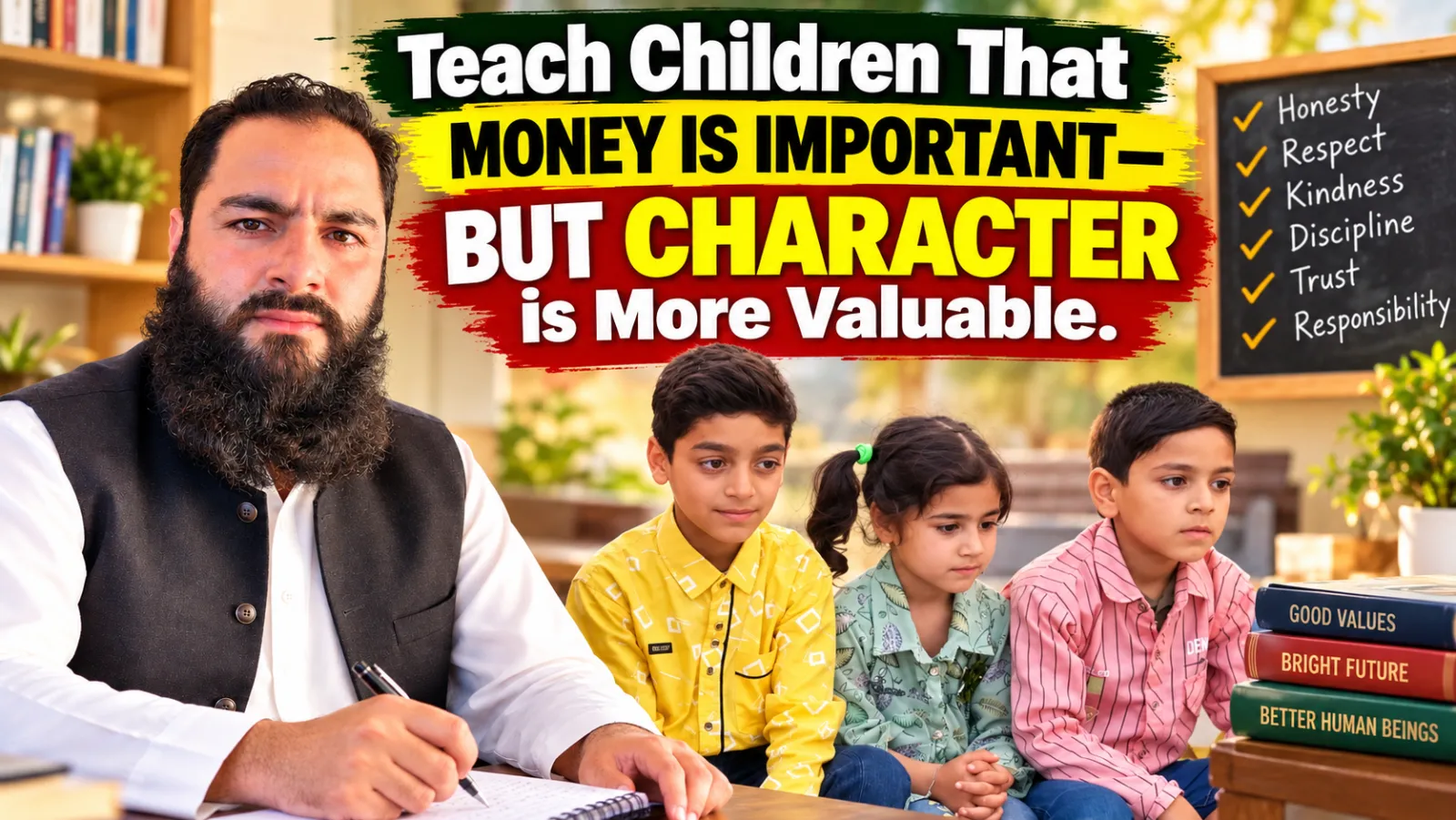
Teach children that money is important—but character is more valuable.
Teach them that another person's property cannot become theirs simply because they have found an opportunity to take advantage of someone.
Teach them that a signature carries responsibility, a promise carries moral weight and a property document carries legal consequences.
And most importantly, teach them that disagreements should be addressed through dialogue and lawful processes rather than threats, abuse or violence.
Society also needs to stop celebrating people merely because they have accumulated wealth or property.
A person may own acres of land and still lose the respect of those around them.
Another may possess little material wealth but leave behind a reputation for honesty that survives generations.
That is the real difference between wealth and worth.
Money can be earned again.
Property can sometimes be recovered through lawful means.
But once trust is destroyed, rebuilding it can take years.
Therefore, before turning a family disagreement into a lifelong feud, people should ask themselves one simple question:
Is the disputed money or piece of land worth losing an entire relationship over?
And where rights genuinely have been violated, the answer should still be lawful and measured: preserve the evidence, seek proper legal advice, use available dispute-resolution mechanisms and allow the law to determine the matter.
Justice does not require hatred.
And protecting one's rights does not require abandoning one's humanity.
In the end, land is inherited for a generation; character is remembered for generations.