Internalizing the spirit of Mission Karmayogi
Dr Monika Koul
“Always first learn to be a servant, and then you will be fit to be a master” Swami Vivekananda
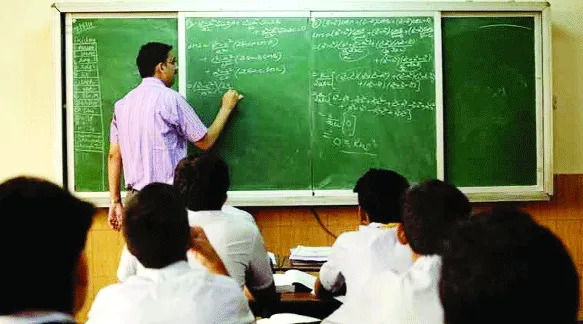
As India moves forward to become a developed country by 2047, the Rashtriya Karmayogi initiative is an action-oriented programme of the Government of India to ensure good governance across all service sectors. It is a capacity-building initiative envisaged to bring about a behavioral change, a nudging attempt, to evoke the feeling of belongingness and ownership amongst all public servants. For academicians, it holds much more than what the basic preamble suggests. Teaching has been defined as the practice of knowledge sharing that involves two partners: the teacher and the taught. It is a profession that involves dedication, hard work, sincerity and integrity. The teacher must assist the student in discovering their capabilities and aptitude. A good teacher in the changing times is more of a facilitator and a mentor as information is available in plenty everywhere. She/he helps the student sieve the information, retain it, and convert that into knowledge. A teacher is, in fact a Karmayogi who keeps the interests of their pupils above everything else. A teacher is a real Karmayogi, a role model for many and must live by example. A real Karmayogi is the one who considers work as worship.
A true teacher Karmayogi is one who pays back to society for every penny received as salary from the public exchequer. Society is undergoing many changes, and so is the field of education. Education is also seen as an opportunity to earn a livelihood and that is absolutely perfect. The aspirations and goals of the students have changed and many things in the system are not fully aligned with student goals. However, NEP 2020 has brought a paradigm shift to the present education system, introducing many new elements. From a teacher’s perspective, attending the session on Rashtriya Karmyogi turned out to be an interesting endeavor. The introductory session regarding the genesis provides insights into the programme, its necessity, and how this capacity-building programme can help fine-tune the teacher’s day-to-day activities with national goals and national aspirations. The focus is on collaboration in knowledge creation and knowledge dissemination through discussions charchas, spending time with students to ensure peer-to-peer interaction. Karmayogi teacher must place extra emphasis on delivering the recent and contemporary content, tailor the content to the student’s aptitude, and focus on exposing students to real-world scenarios through experiential knowledge. This also falls in line with the tenants of NEP 2020.
A very interesting takeaway from the programme modules is to break the glass ceilings and come out of the silos. For Higher Educational Institutes (HEIs) it is mandatory to have interdisciplinary and transdisciplinary research is mandatory to address the challenges confronting the nation-most importantly, pollution, climate change, diseases and epidemics. The projects assigned to the students can also be made more interesting and pertinent. Keeping Indian ethos in mind, educators can revisit some of the assertions mentioned in ancient scriptures regarding medicine, architecture and designs. This can be validated with more scientific reasoning and experimentation, thus ensuring the contribution of Teacher Karmyogis to the Viksit Bharat. The IOT platform also stresses continuous learning and training for the faculty. This shall ensure that the students leverage on the new technological innovations and, as responsible citizens also understand the boons and banes of the technological interventions.
The great educationists of our country have time and again stressed the role of teachers and their contribution in shaping the destiny of many in their classrooms. Dr. A.P.J. Abdul Kalam, the most revered scientist of our country, who interacted with thousands of students emphasized that teachers are responsible for creating citizens who can lead the country to progress, and a strong foundation is needed at all levels of education. The Karmayogi modules reiterate these elements through stories, examples and thought provoking concepts.
The programme is envisaged keeping in mind all the pillars of the institutions, policies, and other frameworks. A Karmayogi educator must also be a leader in letter and spirit. Ensure fair systems and practices are followed in the educational institute. For teachers, many administrative responsibilities accompany teaching. So, their overall conduct while dealing with the students and the other staff members is paramount. A Karmayogi must adopt fair mechanisms in all his dealings (teaching, administration, evaluation). Maintain equity in the classrooms, avoid creating conflicts among students, encourage student participation in various events, ensure there is a level playing field for all and provide emotional support to the students when they feel low. All Karmayogi teachers should nurture curiosity, evoke the inner desire to understand their power, foster a love for the subject, and instil an urge to serve the community in general and the country in particular. The most inspiring lines by our great saint Swami Vivekananda puts Karmayogi as a person who translates his thoughts into action and does it timely and with humility. As teachers we ought to be those Karmayogis and together we can help in meeting the aspirations of the community and the country.
(The author is a Professor, Department of Botany Hansraj College, Fellow IoE, University of Delhi.)