Abuse Has No Place in Democracy: Why PM Modi's Message Deserves Attention
The Strength to Forgive Is the Highest Form of Leadership
Prof Jasim Mohammad
Using abusive language against the Prime Minister of our country is not tolerable at all. Every citizen of our country has the fundamental right to oppose the government or rulers. However, it does not mean that we can abuse people on the highest positions. Democracy allows us to criticize the government, but it does not allow us to abuse people. Our Prime Minister Narendra Modi has been ruling our country for the last twelve years. During this time, India has taken a big step forward in infrastructure development, digitalization, financial literacy, welfare schemes, defense services, technologies, and its foreign relations. The recent incident that happened at Jantar Mantar, where young people abused the Prime Minister and his mother, is a matter of concern for all Indians, regardless of their political views.
Young people are the future of India. They are the most energetic, talented and idealistic group of people who have the right to raise their voice against anything they find unacceptable in our society. However, this does not mean that they should express their views and desires vulgarly, crudely, or brutally. A movement’s strength lies in the force of its ideas, not in the harshness of its language. India has always been a land of vibrant democratic traditions in which people of various ideologies have competed with each other in a parliamentary and public fight. This competition has often been aggressive, but it has always been civilized, because there was a traditional counterbalance to excessive aggression – live meetings and dialogues. Such meetings and dialogues, unfortunately, are being gradually displaced by Internet communications, in which there is a tendency to replace rational argumentation with emotional abuse
One of the most disgusting features of the digital era is that people are beginning to consider criticism and condemnation of their person as something necessary, and therefore they defend their opinion not with arguments, but with insults, curses, and threats. This trend is entirely due to the fact that the Internet has given people an illusion of freedom of speech, which they have never had in real life. The office of the Prime Minister is not merely about one individual; it symbolizes the democratic mandate of the people of India and the dignity of the Constitution. Respecting that office does not require political agreement. One may oppose the government, campaign against it, or vote for another party. But respect for constitutional institutions remains essential for the health of the Republic.
I think that what is important about this episode is not that swearing occurred, but that it was quickly forgiven. In an era where everyone is so hostile towards each other, it is good to see that the Prime Minister took the higher ground and showed mercy instead of hatred and vengeance as a response to such rude language. This sets a good example of leadership because it shows forgiveness towards those who have wronged you and teaches people that you don’t have to respond to negativity with more negativity. It really makes you think about the relationship between the leaders of a country and the citizens that they serve. It is not healthy for either party if the government responds to criticism with even harsher criticism. In the end, it is the government that holds all the power so they should use it wisely when dealing with issues like this.
I think a good way to put this would be: if you accidently bite your tongue, you can’t then proceed to destroy the rest of your teeth in revenge. Similarly, you can’t treat your own children like the worst possible monsters just because they have made some mistakes. This is an important lesson because many people, including the government, forget that they themselves were once young and ignorant. A good way to stop the next generation from repeating the same mistakes is to show them a path away from ignorance, which is exactly what the Prime Minister did.
It is this ability to rise above the situation that makes him worthy of respect and recognition as a leader. By taking responsibility for leading this country and setting a good example of forgiveness and understanding, he is saying that he accepts his role and he will do everything he can to ensure the future of this country is bright and successful. We need more politicians like him in today’s society!
There is also a different angle in this response that needs to be noted. The public space demands and rewards quick reactions to any perceived slight. There is often an enormous amount of mileage to be gained by those who seek it in indulging and exploiting this reaction mechanism. It is therefore important that leaders rise above the calls of the moment and demonstrate that they are not easily cowed or unduly provoked. It takes a lot of courage to exercise restraint and forgiveness in such circumstances. It is a sign of strength, not weakness, to believe in one’s own convictions.
It is not only India’s political leaders who bear responsibility for the events that followed. Educational institutions, parents, teachers, and the entire community need to understand the importance of instilling in the young minds a sense of entitlement as well as respect, the willingness to question bosses as well as the humility to accept being questioned. Education must continue to be about inculcating values as well as providing technical skills.
The youth must always be prepared to speak up, but also learn to differentiate between contempt and critique. Viksit Bharat 2047 will not be a fully developed country only in the economic sense. It will have to be a country with a mature democratic ethos, where dissent and disapproval are expressed freely but respectfully, and criticism does not turn into defamation. The people of India need to ensure that, in their debates and discussions, they continue to rise above the temptation to insult each other’s personal choices and adopt more productive ways of disagreeing with each other’s viewpoints.
Political verdicts on Prime Minister Modi will always be mixed, as they must be in a democracy. But shouldn’t all political parties and citizens, regardless of their differences, stand united in condemning such unacceptable abuse of public discourse? After all, democracies are supposed to be about healthy disagreements on matters of public policy, not personal abuse meant to hurt and humiliate. Ultimately, the most significant takeaway from this situation is that the future of the country’s youth is much more important than a petty argument occurring right now. By forgiving those who insulted you, wishing them well in their life, and asking society not to humiliate them, but instead, help you become better, one shows that one truly considers the future of one’s country and its youth. After all, it is not an easy task to admit one’s fault or accept insults from people who consider themselves morally above others.
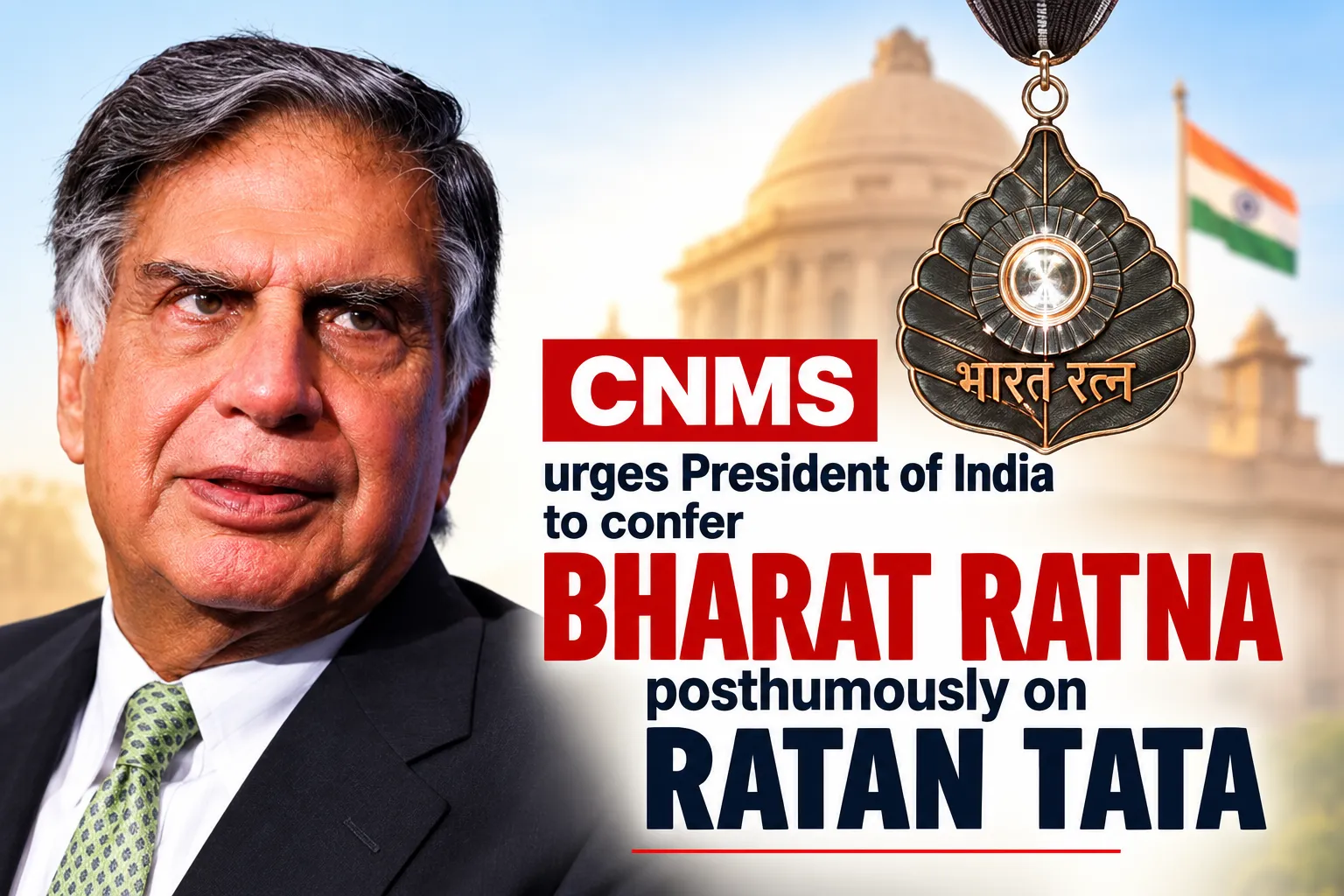
(Author is Professor and Chairman Centre for NaMo Studies(CNMS). Email : profjasimmd@gmail.com)
Presently ; Managing Trustee/ Chairman
Centre for NaMo Studies (CNMS)
{ A Centre for Research & Development}
Personal : Email: profjasimmd@gmail.com, 099970 63595