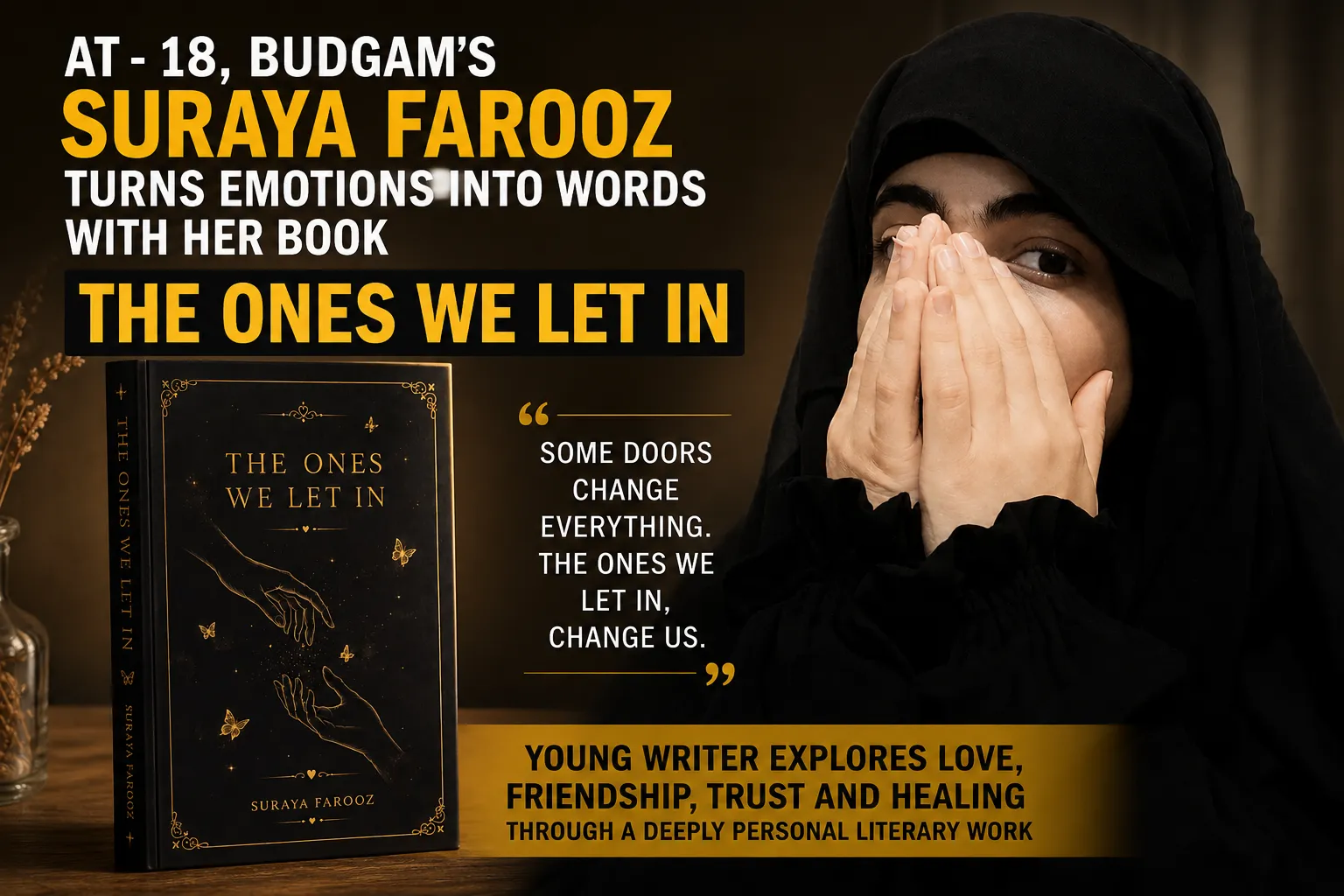
Young writer explores love, friendship, trust and healing through a deeply personal literary work
Shahid Peer
Srinagar: At an age when many are only beginning to discover their creative voices, 18-year-old Suraya Farooz from Budgam has taken a meaningful step into the world of literature with her book, The Ones We Let In.
The book is an emotional exploration of trust, friendship, relationships, love and healing, examining the profound influence that people can have on our lives. Drawing from thoughts, feelings and personal experiences, Farooz uses her writing to reflect on the connections we form and the emotional marks they leave behind.
The title itself captures the central idea of the book: the people we allow into our lives can change us in ways we may never have expected.
“Some doors change everything. The ones we let in, change us.”
Through its pages, The Ones We Let In looks at the different dimensions of human relationships the comfort of friendship, the vulnerability of love, the pain of separation and the process of healing. Rather than presenting relationships as simply happy or painful, the book explores how each connection can become a lesson and contribute to who we eventually become.
The book's visual identity complements its emotional theme. Its black cover, decorated with elegant golden artwork, butterflies and two reaching hands, symbolises connection, distance, longing and the possibility of finding one's way back to oneself .
For Farooz, writing is not merely a creative exercise. It is a way of expressing feelings and experiences that can sometimes be difficult to communicate otherwise. Her work seeks to create a space where readers can recognise fragments of their own lives and emotions.
At just 18 years old, Farooz's literary journey also highlights the importance of providing young writers from Jammu & Kashmir with platforms where their voices can be heard. Her work represents an emerging generation of young people who are choosing storytelling and literature as a means of expressing their perspectives.
With The Ones We Let In, Farooz hopes to connect with a wider readership and explore opportunities for her work to be featured, supported and published through literary and media platforms.
Ultimately, the book leaves readers with a question that is both simple and deeply personal:
Who do we let into our lives and who do we become because of them?