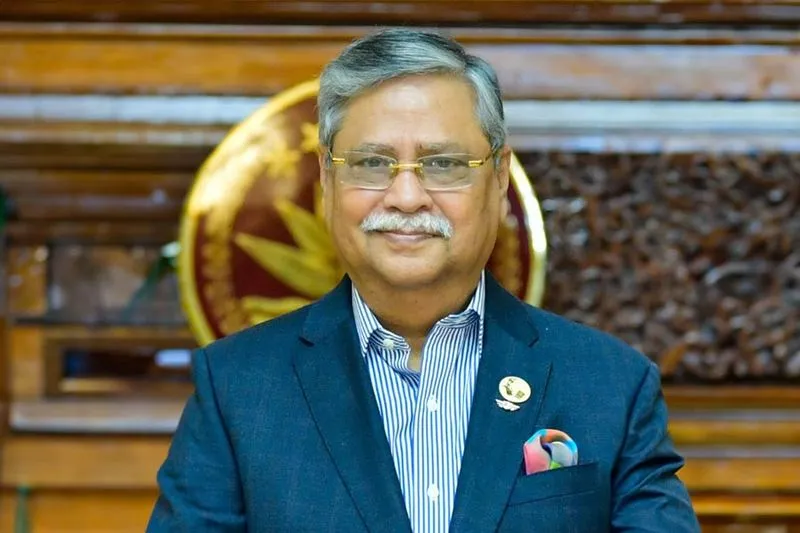
DHAKA, Jul 26: Bangladesh's former president Mohammed Shahabuddin, who resigned two days ago, will be probed for alleged corruption allegations, Law Minister Mohammad Asaduzzaman said on Sunday.
The 76-year-old, Shahabuddin, a longtime ally of deposed Prime Minister Sheikh Hasina, resigned on Friday, citing health complications, two years ahead of the end of his tenure.
His resignation comes amid speculations that Prime Minister Tarique Rahman's government was uncomfortable with the largely titular head of the state.
"The government does not want to do injustice against any person. But the allegations of corruption before his assumption of presidency are being scrutinised thoroughly," Law Minister Asaduzzaman told reporters in Chattogram.
He said that due to public demand, legal action would be taken following investigations into the allegations against the former president.
Parliament Speaker Hafiz Uddin Ahmed will serve as Acting President for 90 days in accordance with the Constitution, and a new president must be elected within that timeframe.
Ahmed, who was on an overseas visit for medical treatment, returned home early to assume the acting charge of the highest office.
Shahabuddin was elected to the highest office by the previous parliament and was the only person still holding his constitutional position, long after the violent July-August 2024 student-led street protest that toppled Hasina's Awami League government.
Hasina fled to India and has been living there since August 5, 2024.
Shahabuddin's departure comes days after the deposed premier announced she was preparing to return home by December despite a pending death sentence, causing a political uproar in Bangladesh.
Media reports claimed that Shahabuddin contacted the deposed premier over the phone recently, disappointing the ruling Bangladesh Nationalist Party's top leadership.
But in an interview with The Daily Star newspaper on Thursday, Shahabuddin dismissed the reports as "baseless."
A 1971 Liberation War veteran and former lower judiciary judge, Shahabuddin was elected to the presidency by the previous parliament on February 13, 2023.
Before he was elected the largely ceremonial head of the state, he served as a commissioner of the statutory Anti-Corruption Commission (ACC) and subsequently director of private Islami Bank Bangladesh.
The law minister hinted that Shahabuddin's activities as the director of the ACC and the Islami Bank came under the purview of the government investigations.
Asked if any overseas travel ban has been imposed on the former president, Asaduzzaman said the matter falls under the jurisdiction of the Home Ministry.
Responding to a question about whether Shahabuddin could be arrested, the minister said political parties might make such demands and that their legal basis would be examined accordingly.
Officials said Shahabuddin left Bangabhaban, the official residence of the Bangladesh president, on Sunday and moved to his private residence in Gulshan area in the capital. According to the rules, he could have lived at the presidential palace for 30 days after his resignation.
In his resignation letter addressed to the speaker, Shahabuddin said he was suffering from heart disease, high blood pressure, diabetes and kidney complications and was recently diagnosed with Autonomic Neuropathy.
"Because of the prevalence of these diseases, I am physically and mentally incapable of discharging the responsibilities of such an important constitutional post of president," he wrote.
He was the commander-in-chief of the armed forces, though the role was largely ceremonial with executive power resting with the prime minister.
However, Shahabuddin's position gained prominence when the 2024 violence toppled Hasina's government and Muhammad Yunus-led interim regime mounted pressure on him to quit.
Two months ahead of the February 12 elections that ended Yunus' 18-month rule, Shahabuddin told the media he was "humiliated" by the interim government, which also removed his portraits from Bangladeshi embassies abroad.
At that time, he said he received "100 per cent support" from the BNP while the army, along with navy and air force chiefs, firmly stood by him.
In a December 2025 interview, he expressed his desire to resign after fulfilling his constitutional duty to hold the February elections. (PTI)