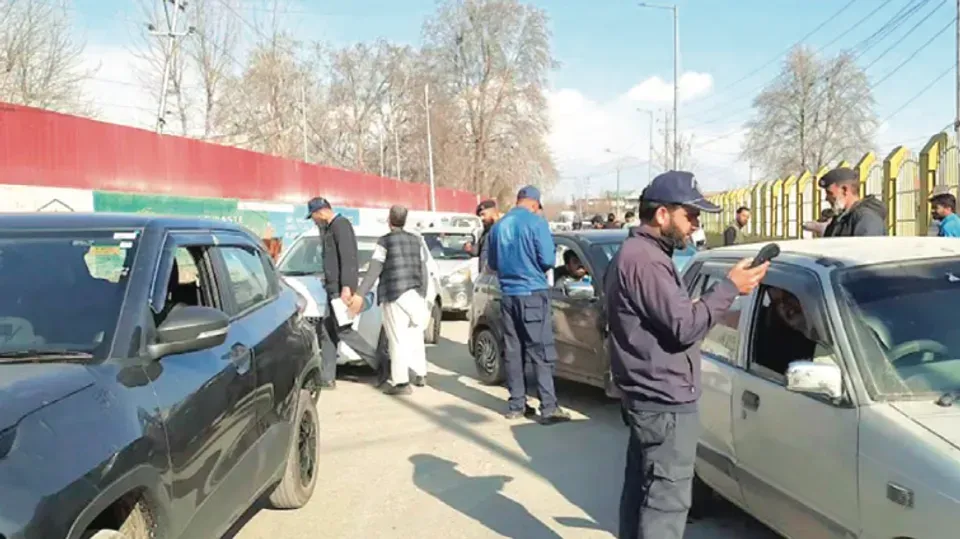
Sopore is known for its transport congestion. Before thinking of visiting Sopore, heavy, haphazard, and congested traffic is often the first thing that comes to mind, especially around Sopore Adda, from Nowpora Road to Sangrama Flyover. More often than not, it would take nearly an hour to travel from Nowpora Adda to Sangrama Flyover, depending on traffic rush, which frequently occurs due to undisciplined transport movement, causing problems for passengers, transporters, and, above all, shopkeepers. However, we crossed these heavily congested junctions in just two minutes due to the one-way traffic facility in Sopore.
Roads are public property, and everyone must obey the laws for their own safety and the safety of others. The one-way road within Sopore Adda is evidence of the smooth functioning of the transport system. We often violate specific traffic rules, which causes inconvenience for others.
Transport is of a diverse nature. There are different types of people on the roads, driving different vehicles for various purposes, but with one common objective: to reach their destinations without wasting time on the roads. We often become victims of congestion due to our own faults. Moreover, the mismanagement and misuse of roads by people cause distress during medical emergencies and create obstacles in economic activities and official affairs.
What I see in Sopore must be followed by other major towns of Kashmir. One-way traffic is the only way to save time and precious lives. Some of the ground observations are quite surprising. No vendor has been disturbed, shops have not been affected, and business is growing smoothly. It is a new concept and may seem unusual at first, but it is working.
Your journey on the road becomes enjoyable when you are not stuck in traffic jams and congestion. It helps you reach your destination on time. Indeed, roads lead us towards real progress. India’s new road infrastructure is what we have been looking forward to, and waiting for such a historic change was inevitable. The four-lane NH-1 and the Srinagar–Jammu Road are examples of this transformation.
There are some suggestions, as this new concept has transformed the historical condition of our roads and is likely to have a positive impact on our daily lives. There must be local plans developed by the administration for the main markets of towns. So far, I have seen this approach in some towns where one-way traffic systems have been introduced successfully.
It is generally suggested that every main market in major towns should have public toilets, proper cleanliness measures, a well-planned traffic management system, adequate parking facilities, and police personnel deployed at important intersections. There should also be a comprehensive traffic management plan for passenger vehicles, along with designated spaces for parking and movement, ensuring convenience for all and minimizing inconvenience.
The local administration, police, and municipality can play a pivotal role in keeping our cities and towns free from congestion and unnecessary rush on the roads. Coordination among transport authorities, trade leaders, shopkeepers’ associations, and the local administration is essential for planning and implementing long-term development initiatives.
The one-way traffic system in Sopore is an example of effective coordination among all stakeholders. Installing CCTVs in the market, providing space for everyone, and making the market hassle-free have now become a reality.