The Ladakh Administration headed by Lieutenant Governor recently issued a landmark order by imposing a strict ban on single-use plastics and launched a major crackdown on littering. The Government officials have been empowered to issue spot penalties, alongside random inspections at Leh Airport to protect the region’s fragile ecosystem. Lieutenant Governor Vinai Kumar Saxena has ordered a ban on the sale and use of single-use plastic and directed a crackdown on littering in J&K. This is seen as a major environmental initiative. While addressing the media LG Saxena said that the measure was essential to safeguard Ladakh’s fragile environment and ecology and its landscapes, which underpin its tourism driven economy. Under the new enforcement framework, hefty penalties will be imposed for littering, and violations related to single use plastic items. The field level officers like the Block Development Officers (BDOs), Tehsildars, Municipal Officers, Foresters and Forest Guards, have been empowered to detect violations and issue on spot challans. The Ladakh administration has also ordered random inspections at Leh Airport and various border and entry points across Ladakh to prevent the inflow and circulation of prohibited plastic items. This decision comes amid growing concerns over the serious impact of plastic waste on Ladakh’s environment which witnesses a huge influx of tourists during summer months. Like Ladakh, Jammu & Kashmir also needs a similar initiative to make it polythene-free. Both Lt Governor Manoj Sinha and CM Omar Abdullah must jointly work on this. The 100 days Drug Free J&K Campaign (Nasha Mukt Abhiyan) which concluded recently under the leadership of LG Manoj Sinha was a big hit. Mr Sinha visited all the 20 districts and this has created a tremendous pressure on the drug mafia. I think we need a similar campaign to be launched titled “Waste Free Jammu & Kashmir” Kachra Mukt Jammu Kashmir.
The waste free Kashmir should extend beyond plastic carry bags to include the packaging used for snacks, biscuits, spices, and other consumer products. The households with sufficient land should be asked to compost biodegradable within the house premises especially in cities like Srinagar and Jammu and bigger towns like Anantnag, Baramulla, Udhampur, Poonch and other places. The smaller towns and villages can also be covered under this programme once municipal corporations and councils get better results.
We need to understand that 80 % of our municipal solid waste-MSW is organic in nature, mostly kitchen-food waste. This is compostable but once we mix this with non biodegradable waste like diapers, plastic trash, sanitary waste etc., it is useless and causes foul smell when dumped unscientifically on road sides, riverbanks , open plots or even garbage dumping sites ?
Those with at least a Kanal of land around house can easily manage it through compost pits and this will reduce load on our landfill sites. We have 50 to 60 % population that own this much land in Kashmir valley or in Jammu province around their houses. Let the Govt start with this population and make it mandatory for them to home compost the kitchen and food waste. I have been speaking and writing about this for a long time and in-fact gave a presentation to former Chief Secretary Mr B V R Subramanium on the orders of J&K High Court Chief Justice Geeta Mittal around December 2018. He assured to act but got transferred later on. I am myself composting my kitchen waste , food waste, dry leaves for the last 11 years now?
My personal experience
My family generates around 2 kgs waste daily and out of this 1.800 Kgs is biodegradable / food waste. I dump this waste in two compost pits and mere 100-200 gms dry waste-like pet bottles, plastic wrappers, cardboard etc., is collect in a big bin. I have been doing this activity for last al most 13 years now. For the last 1 month the waste collection service in my area has been suspended due to a dispute over the landfill site in Chadoora, but my family has not been impacted at all. Many of my neighbors take waste with them in cars or bikes and dump it in SMC’s trash collection sites at Chanapora bypass and some dump it unscientifically in the dark either in irrigation canals, open plots or roadsides?
More challenges in rural areas
Waste management is not only a challenge in urban areas of Kashmir but this is more problematic in rural areas especially those areas where there is no waste collection service available. The Kashmir valley as a whole is getting urbanised now and we have 70 to 80 % of such villages in J&K where there is no waste collection facility available? As per the chapter 9 of the Operational Guidelines of SBM Gramin phase 2, first of all a Swachata Plan (Sanitation Plan) had to be adopted by the local panchayat involving all people by holding a Halqa Majlis (gram sabha). In spite of clear directions in these guidelines that plan must go from village panchayat but in J&K it comes from the Civil Secretariat or Directorate of Rural Sanitation (Mission Directorate) to villages in J&K? The handful of villages where the waste is collected are pushed into waste collection vans in a mixed form and no segregation of waste is done which is an open violation of MSW Rules 2016 / 2026.The Block Development Officers (BDOs) are directed by their officers to execute the plan as per the will and wish of bureaucrats sitting in the civil secretariat. Panchayat members, Panchayat secretaries are following the orders and nobody in villages are able to give their suggestions on waste management. In fact now for more than 2 ½ years we have no elected panchayat members available and things are more chaotic. This is not only a violation of the SBM Gramin guidelines but it kills the essence of the Panchayati Raj system as well.
Conclusion
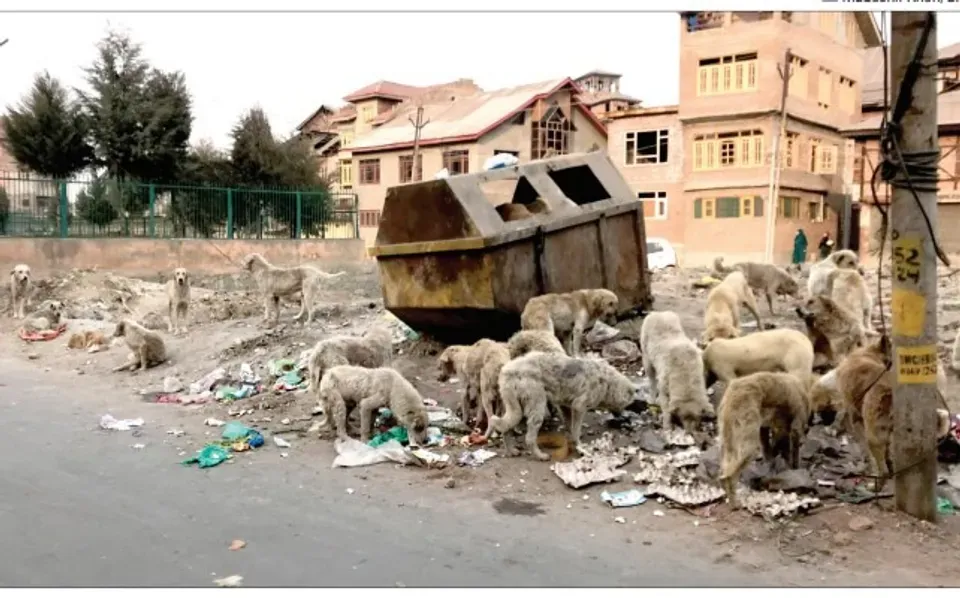
This author along with some members of J&K Climate Action Group-JKCAG had a meeting with DC Budgam recently and we suggested some ideas to make Budgam a waste free district in 1 year. He showed seriousness to launch this campaign which should start with home composting of kitchen waste, food waste & other biodegradable waste. We suggested involving the district officers, sectoral officers to start home composting. Once they do it then only they can ask people to start processing biodegradable waste at home. The school students also can play a role in this their involvement in the campaign was discussed as well. We are again meeting for a follow-up meeting soon. Waste dumping in streams, roadsides is not only impacting our water bodies, atmosphere and our health but this is giving open invitation to dogs who then attack our children, women and old people. Every day dozens of people are attacked by dogs in J&K. The Nasha Mukt type campaign for waste management at Govt level is must and both Lt Governor and CM must join hands for the same.
Dr Raja Muzaffar Bhat is Founder J&K RTI Movement and Chairman J&K Climate Action Group