Nothing destroys a society faster than making honest young people feel foolish for being honest
My mother often used to say that fraud can exist in any field of life, but education is different. Education, she believed, is sacred. It is the one place where honesty survives even when the world outside becomes selfish and cruel. As a child, I believed her completely. I believed classrooms protected dreams, teachers guarded truth, and examinations were the purest form of justice where only hard work mattered.
But today, if someone asked me where corruption entered most deeply, I would say without hesitation: our education system.
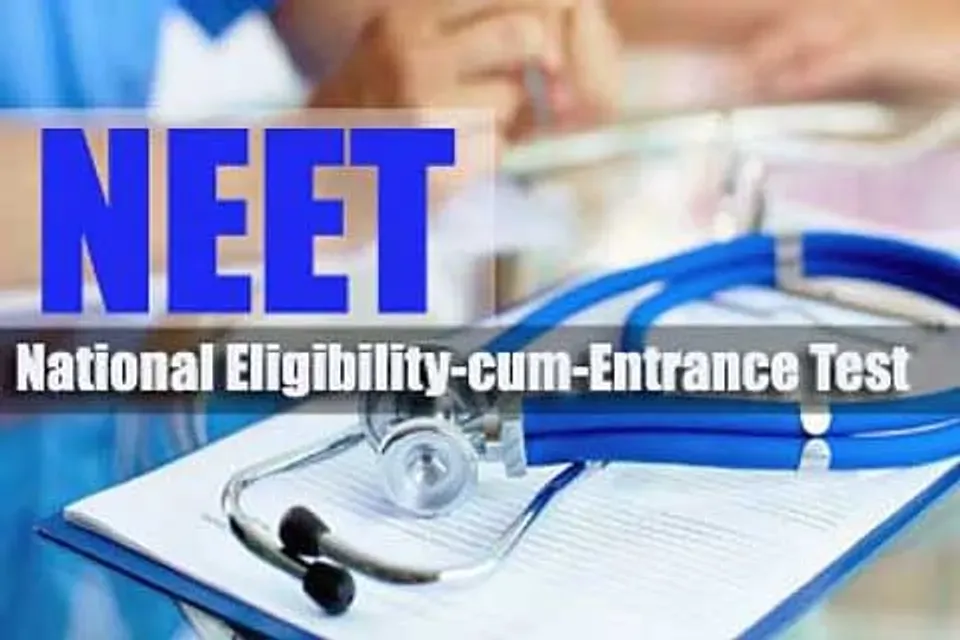
The painful reality is that this corruption is no longer hidden. It stands openly before us, dressed in the language of merit, competition, rankings, and success. The controversies surrounding competitive examinations like NEET have once again exposed the reality millions of students live with. Behind every leaked paper is not merely a technical failure. It is shattered confidence, sleepless nights, exhausted parents, and students slowly losing faith in honesty.
For middle-class and poor families, an examination is never just an exam. It is an emotional investment. It is years of sacrifice packed into one day. It is a mother praying silently before dawn while her child studies. It is a father sacrificing his own needs to pay coaching fees, books, hostel expenses, and endless forms.
And then one morning comes a headline:
“Paper Leak.”
“Exam Cancelled.”
“Investigation Underway.”
Just a few words, yet enough to destroy years of effort.
I recently came across a father’s statement that deeply disturbed me. He said, “I worked like a donkey for two years to pay my son’s tuition fees, and today he asked me what was the point of hard work when the paper was already leaked.”
That sentence carries more pain than any official report. What answer do we have for such parents? What do we tell students who isolated themselves for years only to discover someone else bought the question paper beforehand?
This is not merely an examination crisis. It is a moral crisis. Somewhere along the way, education stopped being about learning and became a marketplace. Coaching centres became industries. Success became a product. Children became customers. Dreams became commodities. The greatest tragedy is not only that papers leak; it is the message delivered to an entire generation: Hard work alone is not enough.Integrity alone is not enough.
Someone somewhere can still manipulate the system. Nothing destroys a society faster than making honest young people feel foolish for being honest.
Our children are growing up watching corruption defeat discipline and influence overpower effort. Slowly, a generation is beginning to believe that shortcuts matter more than sincerity. And that is dangerous. Nations do not collapse only through economic crises or political instability. They begin to decay when their young people lose faith in fairness.
Every year millions compete for limited seats. They spend their best years preparing for examinations that increasingly resemble pressure chambers rather than pathways to learning. Anxiety, depression, burnout, and isolation have become normal parts of student life. Yet despite all this suffering, the system cannot even guarantee a fair examination. Sometimes I wonder whether we truly understand what happens inside the mind of a student preparing for such exams. The world only sees ranks and results. It does not see silent breakdowns, the fear of disappointing parents, or emotional exhaustion hidden behind forced smiles.
When examinations are cancelled because of malpractice, students do not merely lose an exam date. They lose emotional stability. They lose confidence. They lose trust. Most painfully, they begin losing hope. Who is accountable?
We proudly say students are the future of the nation. But a nation that cannot protect their dreams is slowly destroying its own future.
The problem is bigger than one examination body or one scandal. Weak accountability, commercialization of education, coaching mafias, political interference, poor regulation, and obsession with marks have collectively poisoned the spirit of education. Today many institutions look impressive externally, but internally struggle with ethical collapse. Degrees are increasing, but values are decreasing.
Education was meant to create thinkers, reformers, dreamers, and compassionate citizens. Instead, for many students, it has become an endless tunnel of competition where self-worth depends entirely on ranks and percentages. And now, even those ranks are under suspicion.
A hardworking student should never compete with corruption. Examinations should test knowledge, not a student’s ability to survive injustice. The need of the hour is not cosmetic reform but moral rebuilding. Transparency must become non-negotiable. Accountability must become real. Those responsible for destroying examination credibility must face consequences regardless of status or influence.
More importantly, we must restore dignity to education. Because education is not merely about producing doctors, engineers, or officers. It is about protecting hope. And if someday our children stop believing honesty can win, then the greatest failure will not belong to students. It will belong to society itself.
My mother still says education is sacred. Perhaps she is right. Education may still be sacred. It is only the people entrusted to protect it who have forgotten its value.
Ikkz Ikbal holds Masters in Biotechnology and is Principal & Academic Head at Maryam Memorial Institute, Pandithpora Qaziabad. He X’s @IkkzIkbal.