Hope for possible permanent peace from the agreement?
Kishan Bhawnani
A historic turning point in US-Iran tensions - from a ceasefire to the threshold of a deal: Will the war be put to an end? Will an agreement offer hope for a possible lasting peace? - A new chapter in changing geopolitics-A comprehensive analysis
From the global energy crisis to a diplomatic solution:A historic turning point in US-Iran tensions - Agreement on an MoU? - Could 48 hours prove decisive for the entire world?
Iran and the US are very close to signing a Memorandum of Understanding, which marks a significant opportunity for global peace - could the consequences be extremely serious if this opportunity is missed? - Advocate Kishan Sanmukhdas Bhawnani, Gondia, Maharashtra
Gondia - Global geopolitics in West Asia is once again at a crucial juncture, with long-standing tensions between the United States and Iran now appearing to be moving towards a possible diplomatic resolution. The intense military conflict that lasted nearly 40 days, severely impacting energy supply chains and global trade routes, had deeply concerned the international community. In particular, the Strait of Hormuz, a major route for nearly one-third of the world's maritime oil shipments, became a focal point of conflict. Any instability in this region not only led to unexpected spikes in oil prices but also destabilized the global economy. I, Advocate Kishan Sanmukhdas Bhawnani, Gondia, Maharashtra, believe this situation became even more challenging for energy import-dependent countries like India, which saw direct pressure on inflation and the current account deficit. Against this backdrop, the two-week temporary ceasefire implemented on April 8, 2026, was a significant diplomatic intervention, brokered by Pakistan through talks held in Islamabad. This initiative was not only a positive signal towards regional peace but also demonstrated that middle powers can play a decisive role in resolving complex global crises. Donald Trump's decision to extend the ceasefire indefinitely on April 21 signaled that both sides now prioritized dialogue over confrontation. This decision significantly contributed to restoring stability to international markets and giving time to the diplomatic process. Now, according to the latest reports from May 6, 2026, the two countries are very close to signing a Memorandum of Understanding, which would not only pave the way for ending the current conflict but also outline a comprehensive nuclear agreement. This potential agreement could prove to be a historic moment for global diplomacy, as it provides an opportunity to break the cycle of mistrust, sanctions, and military confrontation that has persisted for years. If this initiative succeeds, it will not only restore stability in West Asia but also give a new direction to global energy security, trade, and strategic balance.
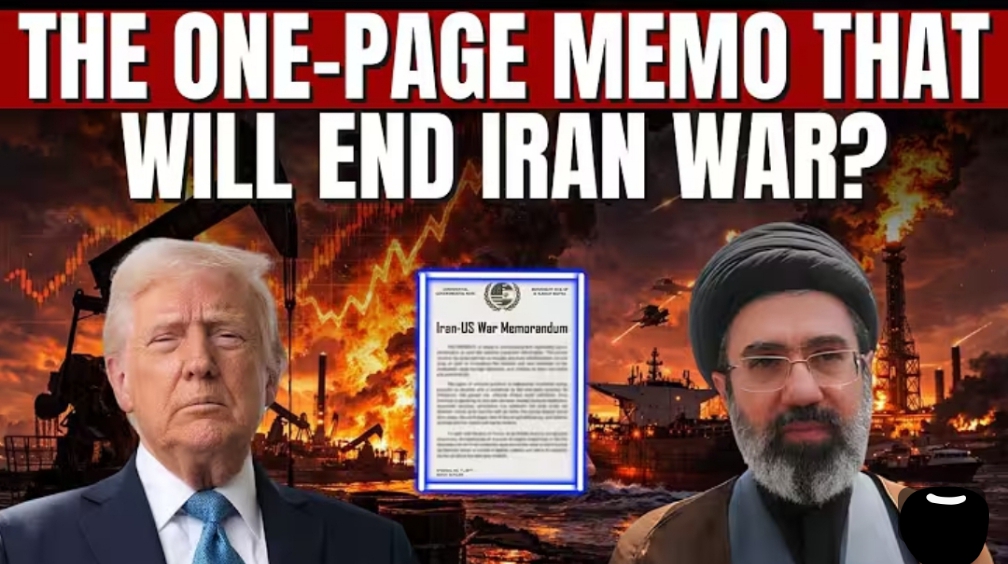
Friends, if we talk about a break in the war? A new hope for peace in a world on the threshold of an Iran-US agreement. To understand this, the global diplomatic landscape on May 6, 2026, appears to be at a turning point where the fire that has been simmering in the Middle East for the past few months appears to be moving towards calm. The military confrontation between the United States and Iran, which began on February 28, 2026, has not only deeply threatened regional stability but also severely impacted the global economy, energy supplies, and international security architecture. But now, emerging signs point to a possible end to this conflict. The two countries are close to agreeing on a one-page Memorandum of Understanding, which, if finalized, could prove to be a turning point in this conflict in 2026.
Friends The most important aspect of this entire development is that this agreement is not limited to a ceasefire but also includes elements of long-term strategic stability. According to the proposed agreement, the two countries will declare an end to the ongoing military conflict in the Middle East, which has escalated to several levels over the past two months. This conflict has seen attacks on maritime routes, drone strikes, and the targeting of strategic installations, severely impacting global trade routes, especially oil supplies. In such a situation, the possibility of ceasefire is being seen as a big relief in itself.
Friends, if we consider the second important dimension of this agreement, it concerns the Strait of Hormuz. This waterway is a major hub for the world's energy supply, carrying approximately 20 percent of global oil. During the conflict, blockades and attacks on this route destabilized oil prices and caused significant fluctuations in global markets. Now, under the proposed agreement, both countries have agreed to reopen the Strait in a phased manner and ensure safe passage of ships. This is not only a positive sign for energy markets but will also help restore global trade confidence.
Friends, if we consider the third and most sensitive issue related to the nuclear program, Iran has indicated that it is willing to halt uranium enrichment for 15 years and commit to not developing nuclear weapons. This proposal is reminiscent of the 2015 nuclear deal, which the US later unilaterally abandoned. This time, both sides appear to be proceeding with greater caution and balance. The US has also indicated its readiness to lift economic sanctions on Iran and return billions of dollars of frozen assets. This move could play a significant role in stabilizing Iran's economic situation.
Friends, however, the path to this potential agreement is not yet completely clear. According to reports, negotiations are underway between the two countries on a total of 14 issues, of which only three have been agreed upon as of 6 May 2026, while differences remain on 11 issues. These issues include sensitive topics such as regional influence, missile programs, and inspection arrangements. This makes it clear that while a preliminary agreement is near, a long way remains before a lasting peace. US President Trump has also played a crucial role in this entire development. While he has taken strong military and economic measures against Iran, he has also taken initiatives toward a diplomatic solution. His decision to temporarily halt the naval operation known as Project Freedom indicates that the US now prioritizes dialogue over confrontation. However, Trump's statements still reflect aggression, such as warning Iran that it would face serious consequences if it attacked US ships. This dialectical strategy, a mix of pressure and dialogue, is a familiar pattern in US foreign policy. Iran has also shown flexibility, indicating its desire to avoid a protracted conflict. Economic sanctions have severely impacted its economy, and it appears willing to accept certain conditions to obtain sanctions relief. However, it is also important for Iran to maintain its sovereignty and regional influence, which complicates negotiations.
Friends, if we consider the global impact of this potential agreement, it will be extremely broad. First, energy markets will stabilize, potentially leading to a decline in oil and gas prices. This will provide relief to countries dependent on energy imports, such as India, Japan, and European countries. Second, global stock markets may see positive trends, as the uncertainty of war is a major risk factor for investors. Third, this agreement can become a positive example for international diplomacy, where two opposing countries reach a solution through dialogue.
Friends, if we consider this entire agreement in India's context, it is extremely important. India imports a significant portion of its energy needs from the Middle East, and the stability of the Strait of Hormuz is strategically important. Furthermore, millions of Indian expatriates work in the region, whose safety is also affected by this conflict. Therefore, if this agreement succeeds, India will benefit both economically and strategically. However, it is also important to note that history teaches us that such agreements are often fragile. The 2015 nuclear deal also began with great promise, but failed to last due to political changes and mutual distrust. This time too, if both sides fail to live up to their promises, the situation could deteriorate again. Therefore, the success of this agreement will depend on how honestly and transparently both countries implement it.
Therefore, if we study and analyze the entire above account, we will find that this moment of May 6, 2026, symbolizes not just a potential agreement, but a significant opportunity towards global peace. If the US and Iran seize this opportunity properly, it will not only give a new direction to their bilateral relations but also lay the foundation for a stable and secure future for the entire world. However, if this opportunity is missed, the consequences could be even more serious.Therefore, the coming 48 hours could prove decisive not only for these two countries but for the entire world.
-Compiled by Author - Tax Expert Columnist, Literary Expert, International Writer, Thinker, Poet, sangeet madhyma , CA (ATC), Advocate Kishan Sanmukhdas Bhawnani, Gondia, Maharashtra 9226229318