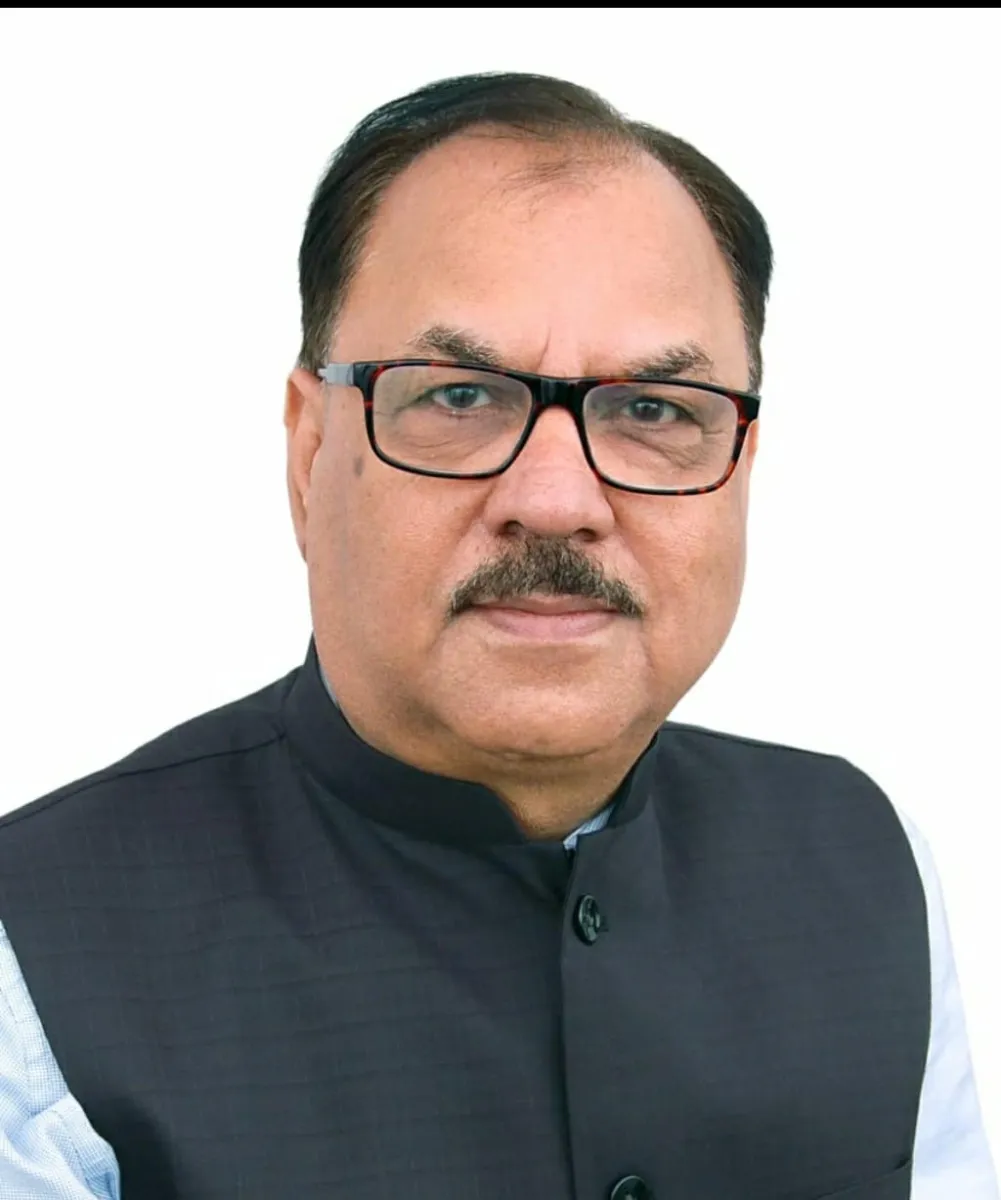
Dr. Kirti Sharma
Technology is no longer confined to laboratories, universities or large corporations. It has become the driving force of human progress, economic growth, national strength and social transformation. The future of nations will be shaped by their ability to understand, adopt and lead in emerging technologies such as Artificial Intelligence, Blockchain, Cloud Computing, Data Analysis, FinTech, E-Markets, Geopolitics, Holistic Living, Internet of Things and low-cost innovations for the poor.
In this rapidly changing world, Indians and the Indian diaspora are playing a remarkable and leading role. Across the United States, Canada, the United Kingdom, Europe, the Middle East, Singapore, Australia and many other parts of the world, professionals and entrepreneurs of Indian origin occupy important positions in technology, finance, research, healthcare, education, public policy and global business. They are not merely participants in the technological revolution; they are among its builders, leaders and visionaries.
1.Artificial Intelligence: Indian Minds at the Frontline
Artificial Intelligence is one of the most powerful technologies of the present age. It is changing healthcare, education, governance, agriculture, finance and industry. In this field, Indians and persons of Indian origin have already made significant global contributions.
Professor Raj Reddy, widely respected as a pioneer in Artificial Intelligence, represents the intellectual depth of Indian contribution to this field. Leaders such as Arvind Krishna, Chairman and CEO of IBM, and Aravind Srinivas, co-founder of Perplexity AI, show how Indian-origin professionals are shaping the future of AI at the highest level.
For India, AI should not remain limited to advanced research or elite corporate use. Its real success will be measured when it reaches farmers, students, small businesses, public hospitals and common citizens. AI must become a tool of empowerment, not merely a symbol of technological superiority.
2.Blockchain: Building Trust in the Digital Economy:
Blockchain is a technology of transparency, security and trust. It has applications in banking, land records, supply chains, digital identity, healthcare and governance. Indian-origin innovators such as Sandeep Nailwal, co-founder of Polygon, have shown that Indians can build global platforms in this emerging field.
Blockchain is often discussed only in relation to cryptocurrency, but its larger value lies in creating transparent systems. In countries like India, where documentation, verification and trust are central challenges, blockchain can help reduce disputes, corruption and delays.
Cloud Computing: Creating Global Digital Infrastructure.
3.Cloud computing has transformed the world by making digital infrastructure available to all. Earlier, only large organizations could afford advanced computing systems. Today, even a small startup, school, hospital or social organization can use cloud-based tools to work efficiently and reach wider audiences.
Indian-origin leaders such as Jay Chaudhry and Sanjit Biswas have built globally respected technology enterprises. Their success reflects the capacity of the Indian diaspora to lead not only as employees, but as founders, innovators and institution-builders.
4. Data Analysis: Turning Information into Wisdom:
Data is one of the most valuable resources of the modern world. But data alone is not enough; it must be studied, analyzed and used responsibly. Data analysis helps governments improve policies, businesses understand markets, doctors detect health risks and educators improve learning outcomes.
Indians are playing a leading role in this field across global consulting, technology, finance and research organizations. In India, with its vast population and growing digital infrastructure, data analysis can become a powerful tool for better governance, social welfare and economic planning. However, privacy, ethics and security must remain central to this process.
5. E-Market, E-Banking and E-Learning: Digital Transformation of Society
The digital revolution has changed the way people buy, sell, learn and transact. E-markets have opened new opportunities for small traders and producers. E-banking has made financial services faster and more accessible. E-learning has taken education beyond the boundaries of classrooms.
Indian entrepreneurs and professionals have played a major role in building digital platforms that serve millions. The next responsibility is to ensure that this digital progress reaches rural areas, women, senior citizens, small entrepreneurs and weaker sections of society. Technology must not increase inequality; it must reduce it.
6.FinTech: India’s Model of Financial Inclusion
FinTech is one of India’s strongest success stories. Digital payments, mobile banking, UPI and direct benefit transfers have changed the financial behaviour of millions of Indians. Entrepreneurs such as Nithin Kamath of Zerodha and Upasana Taku of MobiKwik represent the energy of India’s FinTech revolution.
The importance of FinTech is not only convenience. It gives dignity and opportunity to small traders, self-employed persons, students, farmers and first-generation entrepreneurs. It brings people into the formal economy and creates a more transparent financial system.
Geopolitics: Technology as a Strategic Power
Technology has now become a central part of geopolitics. Nations are judged not only by their military strength or natural resources, but also by their digital infrastructure, cyber security, semiconductor capability, artificial intelligence capacity and innovation ecosystem.
7.India’s strategic leadership, represented by personalities such as Dr. S. Jaishankar and Ajit Doval, recognizes that technology, security and diplomacy are now closely connected. The Indian diaspora also plays an important role in this area by strengthening India’s global image, influencing policy discussions and building bridges between India and the world.
8.Holistic Living: India’s Civilizational Contribution:
While technology is advancing rapidly, humanity is also facing stress, loneliness, lifestyle diseases and environmental imbalance. This is where India’s civilizational wisdom becomes highly relevant. Holistic living, yoga, meditation, Ayurveda, mental balance and ethical living are becoming global needs.
Figures such as Sadhguru Jaggi Vasudev, Sri Sri Ravi Shankar, Dr. Deepak Chopra and Baba Ramdev have taken Indian ideas of health and inner well-being to global audiences. The future cannot be built only with machines and algorithms. It must also be built with peace, balance, compassion and responsibility.
9.Internet of Things: The Connected Future
The Internet of Things connects devices, machines, homes, factories, hospitals, farms and cities. Smart meters, smart irrigation, wearable health devices, smart factories and connected transport systems are examples of this technology.
For India, IoT can be especially useful in agriculture, energy management, healthcare, traffic systems, water conservation and urban planning. Indian engineers, startups and diaspora professionals are already contributing to this connected world. The challenge is to make such technology affordable, secure and useful for ordinary citizens.
10. Innovation for the Poor: India’s Moral Leadership
One of India’s most powerful contributions to the world is low-cost, practical and inclusive innovation. Technology should not serve only the rich and powerful. It must also serve those who are struggling for education, healthcare, livelihood and dignity.
Innovators such as Arunachalam Muruganantham, Anand Kumar of Super 30, and Srikanth Bolla represent this spirit. They show that innovation is not only about high investment and large laboratories. It can also come from compassion, courage and a deep understanding of social problems.
This is where India can offer a unique model to the world: technology that is affordable, scalable and human-centered.
Conclusion
The future of technology will be shaped by intelligence, trust, connectivity, data, finance, strategic thinking, health, ethics and inclusion. In all these areas, Indians and the Indian diaspora have already established a strong presence and leadership position.
From Silicon Valley to Bengaluru, from global boardrooms to social innovation centers, from AI labs to FinTech platforms, from spiritual wellness to grassroots innovation, Indians are contributing to the making of tomorrow’s world.
India must now move forward with confidence. Our goal should not be only to adopt technology, but to lead it with values. Technology for tomorrow must be innovative, inclusive, ethical and compassionate.
That is the role India and the Indian diaspora can play: not merely as users of technology, but as global leaders who ensure that technology serves humanity.
Dr. Kirti Sharma
Secretary General
People of India Origin Chamber of Commerce and Industry (PIOCCI)