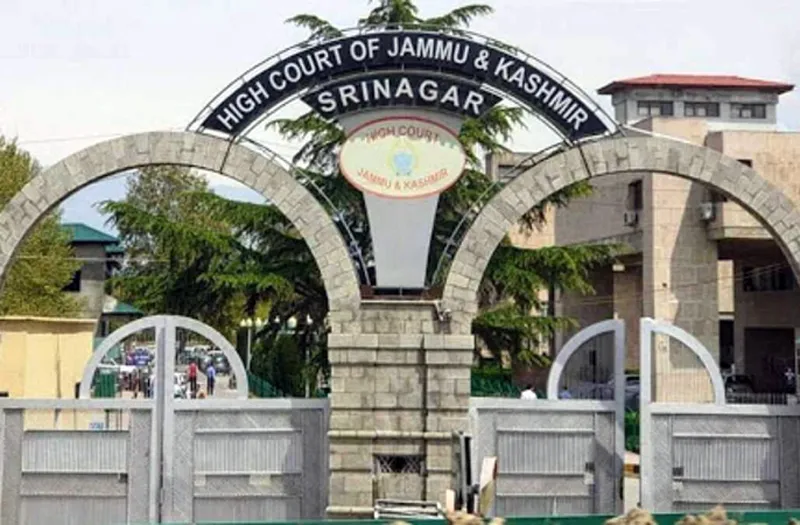
June 7: In an important pronouncement on the scope and ambit of Section 143-A of the Negotiable Instruments Act, 1881, the High Court of Jammu & Kashmir and Ladakh has held that the power to direct payment of interim compensation is discretionary and not mandatory, but once such discretion is exercised upon consideration of relevant factors and for reasons duly recorded, the order would not warrant interference in exercise of inherent jurisdiction.
Dismissing a petition filed by Mohammed Ashraf Mir, Justice Wasim Sadiq Nargal upheld the order dated November 4, 2025 passed by the Chief Judicial Magistrate, Baramulla at Sopore directing payment of interim compensation under Section 143-A of the Negotiable Instruments Act and the judgment dated February 27, 2026 passed by the Additional Sessions Judge, Sopore affirming the order in revision.
The petitioner had invoked the jurisdiction of the High Court under Section 528 of the Bharatiya Nagarik Suraksha Sanhita seeking quashment of the order whereby an application filed by respondent Wazira Reshi under Section 143-A of the Negotiable Instruments Act for grant of interim compensation had been allowed.
As per the facts recorded in the judgment, the respondent had instituted a complaint against the petitioner under Section 138 of the Negotiable Instruments Act alleging dishonour of a cheque amounting to Rs 80,00,000. During the pendency of the complaint proceedings, the respondent moved an application under Section 143-A of the Act seeking grant of interim compensation. The petitioner contested the application by filing objections.
Upon consideration of the matter, the Chief Judicial Magistrate allowed the application and directed payment of interim compensation. Aggrieved by the order, the petitioner preferred a revision petition before the Additional Sessions Judge, Sopore. However, the revisional court dismissed the revision petition and upheld the order passed by the trial court.
Before the High Court, the petitioner contended that the impugned orders directing payment of interim compensation under Section 143-A of the Negotiable Instruments Act were ex facie illegal, arbitrary and unsustainable in law.
The High Court observed that a plain reading of Section 143-A reveals that the legislature has empowered the court trying an offence under Section 138 of the Act to direct the accused to pay interim compensation not exceeding twenty per cent of the cheque amount at the stage contemplated under the provision.
The High Court observed that the power is discretionary in nature and not mandatory and, therefore, it is expected that such discretion be exercised on the basis of relevant considerations and supported by reasons reflecting application of mind to the facts of the case.
After considering the impugned order dated November 4, 2025, the High Court found no merit in the contention that the trial court had exercised jurisdiction under Section 143-A mechanically or without application of mind.
The High Court observed that the order, when read as a whole, reflects due consideration of the relevant facts, the objections raised by the accused and the legal principles governing the exercise of power under the provision. Justice Nargal noted that the Magistrate was conscious of the nature of the discretion vested under Section 143-A and did not proceed on the premise that grant of interim compensation was automatic or mandatory.
The judgment records that the trial court examined the material available on record, took note of the stage of the proceedings and evaluated the circumstances which, in its opinion, warranted exercise of jurisdiction under Section 143-A.
The High Court further noted that the Magistrate had remained alive to the requirement of maintaining a balance between the rights of the complainant and those of the accused and had specifically observed that interim compensation cannot assume the character of punishment.
It was only after noticing the conduct of the accused, the stage of the proceedings and the possibility of delay in conclusion of trial that the Magistrate considered it appropriate to award interim compensation.
The High Court held that the reasons which weighed with the trial court in invoking Section 143-A were clearly discernible from the order itself and that the order could not be termed as a non-speaking order or one suffering from non-application of mind.
Concluding the matter, the High Court held that the discretion vested in the trial court under Section 143-A of the Negotiable Instruments Act had been exercised upon consideration of relevant factors and for reasons duly recorded.
The High Court also noted that the quantum of interim compensation awarded, namely ten per cent of the cheque amount, was well within the statutory limit prescribed under the provision. Finding no arbitrariness, perversity or jurisdictional error in the orders passed by the courts below, the High Court upheld both orders and dismissed the petition along with connected applications.