New Delhi, Jul 9: The United States launched a second consecutive night of large-scale military strikes against Iran, targeting around 90 military sites along the country's southern coastline while Tehran retaliated with missile and drone attacks on US military bases in Kuwait and Bahrain, escalating tensions across the Gulf.
The latest US offensive came less than 24 hours after US President Donald Trump warned that Iran would be "hit hard" if it continued attacks on commercial shipping in the Strait of Hormuz.
Confirming the operation, US Central Command (CENTCOM) said the US forces carried out strikes "to further degrade Iran's ability to attack commercial shipping and innocent civilian mariners in the Strait of Hormuz."
According to CENTCOM, the operation targeted air defence systems, coastal surveillance assets, missile and drone storage facilities, naval capabilities and military logistics infrastructure.
It said the strikes followed Tuesday night's attacks on nearly 80 Iranian military targets, including more than 60 Islamic Revolutionary Guard Corps (IRGC) fast attack boats, in response to Iran's alleged attacks on three commercial vessels navigating the strategic waterway.
"US forces remain vigilant, lethal, and prepared to execute operations directed by the Commander in Chief," CENTCOM said.
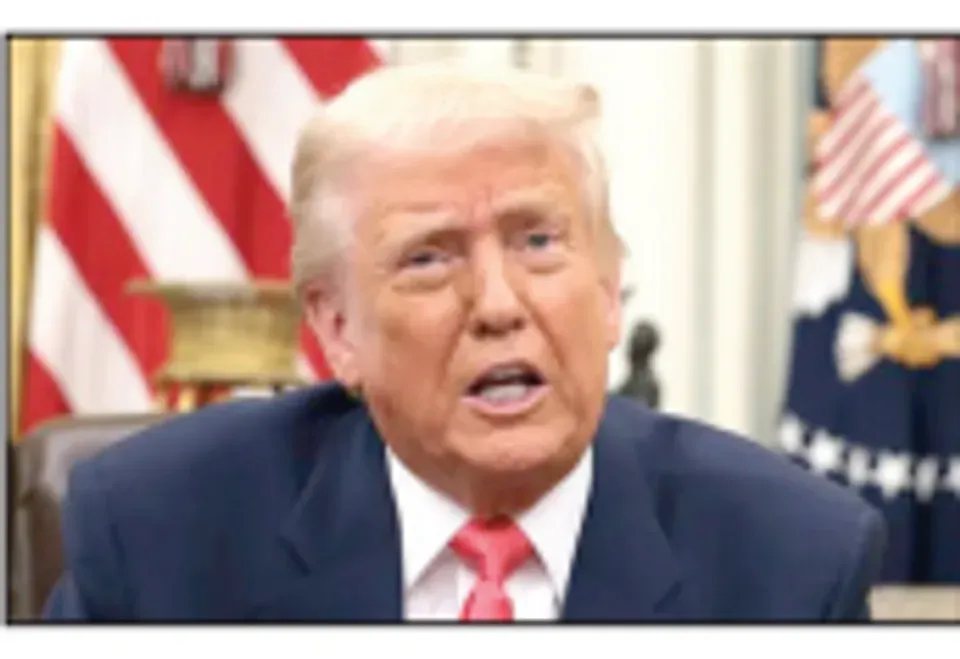
US President Trump defended the military action, writing on Truth Social that the strikes were "in retribution for yesterday's bombing of ships by Iran."
He warned that "if it happens again, it will get much worse."
In a shift from his earlier dismissal of diplomacy, Trump later said Iran wanted "to make a deal" but added, "I don't know if they're worthy."
Iranian state media reported explosions across several southern provinces and on Iranian-controlled islands in the Gulf.
The attacks reportedly struck military facilities and infrastructure in Hormozgan and other coastal regions.
Iran's Ministry of Health said at least 14 people had been killed and 78 injured during the two nights of US strikes across five provinces.
Hossein Kermanpour, head of public relations at the ministry, said 47 of the injured remained in hospital.
Officials in Iranshahr county also reported one civilian death after a US strike hit a building at the local airport.
Military strikes coincide with national mourning
The military exchanges coincided with the final day of national mourning for former Supreme Leader Ayatollah Ali Khamenei, who was assassinated during the opening phase of the conflict.
A plane carrying Khamenei's body arrived in the holy city of Mashhad, his birthplace, where the final funeral ceremony was held after a six-day procession through five Iranian cities and neighbouring Iraq.
Huge crowds gathered along the route as Iranian leaders sought to project national unity and resilience in the face of the conflict.
The funeral arrangements were disrupted after railway services between Tehran and Mashhad were suspended.
Iranian authorities said US strikes destroyed two bridges on the country's busiest rail corridor, although repair work was underway.
Hours after the latest American strikes, Iran's Islamic Revolutionary Guard Corps announced what it described as the first phase of a "punitive response."
In a statement carried by IRGC-affiliated Sepah News and IRNA, the Guards said they had launched joint missile and drone strikes against US military facilities at Arifjan and Ali Al Salem in Kuwait and Juffair and Sheikh Isa in Bahrain.
"The fighters of Islam will not leave the aggressions of the child-killing US army unanswered," the IRGC declared, warning that any further US attacks would trigger "expanded" retaliation against other American bases across the region.
Kuwait's Defence Ministry said its air defence systems intercepted two ballistic missiles and 13 drones, while Bahrain reported successfully intercepting several incoming projectiles, BBC reported.
Neither country reported casualties or major damage.
Iran's Parliament Speaker and chief negotiator with the United States, Mohammad Bagher Ghalibaf, said Washington "still hasn't learned that bullying and breaking promises are no longer cost-free."
Iran also stepped up its diplomatic offensive. Foreign Ministry spokesman Esmaeil Baqaei accused European countries and NATO of actively supporting what he described as the US-Israeli "war of aggression" against Iran.
In a strongly worded statement, Baqaei said countries that had provided military bases and logistical support "cannot evade responsibility" for the conflict.
He also criticised NATO Secretary-General Mark Rutte for what he described as public admissions of European involvement.
Separately, Iran used a United Nations meeting in Geneva to condemn US strikes on facilities linked to its civilian space programme, arguing they violated the UN Charter, international humanitarian law and the Outer Space Treaty.
The renewed military confrontation has heightened fears of a wider regional conflict centred on the Strait of Hormuz, through which nearly a fifth of the world's seaborne oil supplies pass.
While Washington insists its military operations are aimed at safeguarding freedom of navigation and deterring attacks on commercial shipping, Tehran maintains it is acting in self-defence and has vowed that any further US military action will be met with a stronger response.