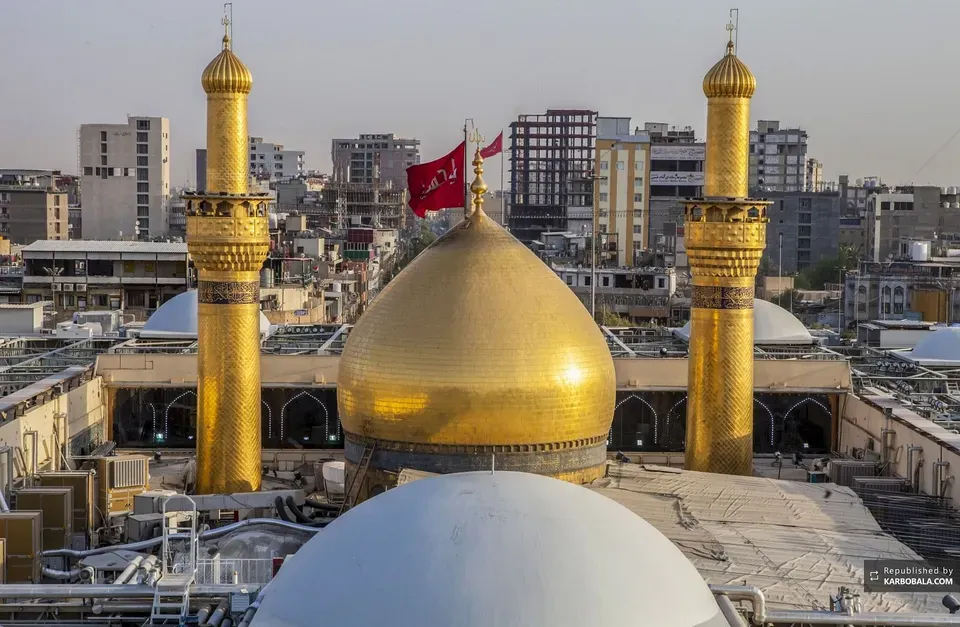
Muharram marks the first month of the Islamic calendar. In this month, Muslims across the world are reminded of a historic tragedy that befell the noble family of the Holy Prophet (SAW) in the plains of Karbala, in present-day Iraq, when the beloved grandson of the Holy Prophet (SAW) and his family members were mercilessly martyred. This episode was a turning point in Islamic history.
Muslims throughout the world observe the 10th of Muharram with great solemnity as a day of great human tragedy as well as victory over evil. It was on this day that Imam Husain, along with his 72 family members, relatives, friends and supporters were martyred at Karbala (Iraq) in 61 A.H. For the last 1447 years, Muslims have been mourning this tragedy. And for the Shi’a Muslims this day of Muharram is known as ‘Ashura and is of great significance to them. The Sunni Muslims too observe this day with great solemnity, and respect.
Mu’awiyah was succeeded by his son Yazeed. He instructed all the Governors of all the provinces to obtain from people the oath of allegiance to him. In Madinah, the Governor obtained the oath from all the people but Imam Hussain and Abdullah bin Zubair did not take oath of allegiance and escaped to Makkah. Their principle was that Caliphate could not be converted into hereditary monarchy and protested that Yazeed was not eligible for Caliphate. At Makkah, Hussain (RA) received an invitation from the people of Kufa to the effect that he should come to Kufa as they would support his Caliphate. Most of the well-wishers of Hussain advised him that the invitation should not be accepted and the people of that place could not be relied upon. But Abdullah bin Zubair gave a contrary advice and pleaded that the people of Kufa were repenting for the betrayal which they had done with Hazrat Ali. Finally, Imam Hussain decided to proceed to Kufa in the company of about a hundred persons, including children and ladies. When the party reached Zibla, a midway station, the information was received that all had been lost. The people who had come out in support of the party were ruthlessly crushed and movement which was in favour of Hussain was suppressed.
Now the predicament for Imam Hussain was whether in view of the changed circumstances he should proceed to Kufa, or he should return to Makkah. And the people began to change their stances and the Bedouins who had accompanied Hussain (RA) also parted company. But after the murder of Aqil, other leaders of the Hussaini movement were hunted and killed, the family members of Hussain (RA) insisted that whatever the odds, the movement must continue and they should proceed to Kufa. The party stayed for some time at the wayside station of Sharaf. When they moved from Sharaf, they witnessed the forces of Ubaidullah bin Ziyad, (Yazeed’s Governor), moving towards them. In order to avoid the encounter with the Umayyad forces, the Imam (RA) and his party turned westward to the plains of Karbala. The Umayyad forces led by Amr b Sa’d chased the party to Karbala, and on encounter asked Hazrat Hussain (RA) to surrender. In the negotiations, Hussain (RA) placed three proposals before the enemy forces. First, that he should be allowed to go back to Makkah or Madinah: second, he be allowed to see Yazeed in Damascus and third, he should be allowed to go anywhere else. Amr reported these proposals to Ubaidullah who rejected all these and asked Hussain (RA) to surrender and accept Yazeed as the Caliph unconditionally. Hussain (RA) refused to surrender before the evil and anti- Islamic rule of Yazeed.
On the 10th of Moharram, the enemy troops martyred Hussain (RA), his dear ones and his companions. All the male members of his family met martyrdom and the lone survival was that of his son Ali - Zain-ul- Abidin (RA).
The event at Karbala shook the Muslim world to its foundations and the haunting effect of this tragedy is still felt.
The Tragedy at Karbala proved to be a clash between truth and evil, right versus wrong, belief versus disbelief, and the oppressed versus the oppressor. Karbala was about standing in the face of oppression, no matter the cost.