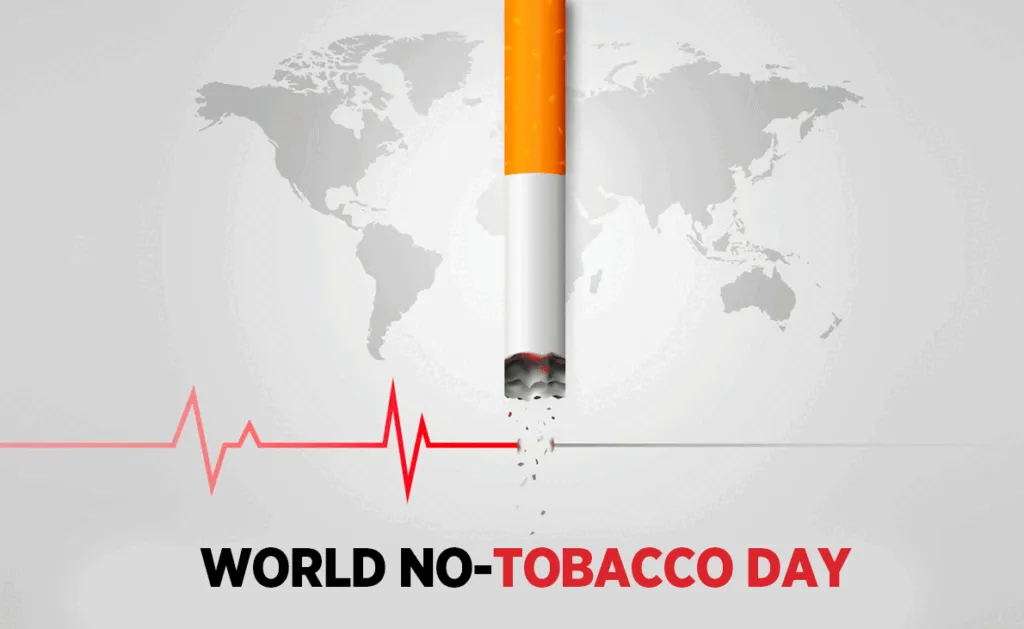
Every year on May 31, the world observes World No Tobacco Day to spread awareness about the harmful effects of
tobacco consumption and to encourage people to lead healthier lives. Initiated by the World Health Organization
(WHO), this day serves as a reminder that tobacco is not merely a personal habit but a major public health challenge
affecting millions across the globe. Tobacco use remains one of the leading causes of preventable deaths worldwide.
Smoking cigarettes, consuming gutka, chewing tobacco, and vaping expose people to dangerous chemicals that
damage the lungs, heart, brain, and almost every organ of the body. According to global health estimates, millions of
people die every year due to diseases caused by tobacco, including cancer, stroke, heart disease, and chronic
respiratory illnesses. In India, tobacco addiction continues to affect both urban and rural populations. Alarmingly,
many young people begin smoking or chewing tobacco during their teenage years due to peer pressure, curiosity,
stress, or the false perception that it appears fashionable. Unfortunately, what begins as experimentation often turns
into lifelong addiction. The consequences of tobacco are not limited to smokers alone. Passive smoking, also known
as second-hand smoke, harms non-smokers, especially children, pregnant women, and elderly people. Children
exposed to tobacco smoke are at higher risk of asthma, lung infections, and other serious health complications. Thus,
tobacco use becomes not only a personal issue but also a social and family concern. Apart from health impacts,
tobacco also creates an economic burden. Families spend large amounts of money on tobacco products, while
governments spend billions on healthcare and treatment of tobacco-related diseases. In many poor households, money
spent on tobacco could otherwise be used for education, nutrition, and healthcare.
The 2026 campaign aims to:
Raise awareness of the tobacco and nicotine industry’s evolving strategies, including the use of synthetic nicotine,
nicotine salts, and analogues to increase addiction potential while appearing technologically advanced; advocate for
stronger policy action to protect youth through bans on flavours, advertising and promotion (including on digital and
social media), and regulation of packaging and product design that increase appeal; and prevent addiction and reduce
demand by equipping the public – especially youth – with the knowledge and tools to resist industry manipulation
and access evidence-based cessation support.
World No Tobacco Day is therefore not only about discouraging smoking but also about promoting awareness,
prevention, and rehabilitation. Schools, colleges, hospitals, civil society groups, and governments organize
campaigns, rallies, seminars, and awareness drives to educate people about the dangers of tobacco. Public places are
increasingly becoming Smoke-free zones and strict regulations are being introduced on tobacco advertising and sales.
However, awareness alone is not enough. Society must support those who are trying to quit. Breaking tobacco
addiction is difficult because nicotine creates physical and psychological dependence. Counseling, support groups,
medical guidance, and strong family support can help individuals successfully quit smoking and rebuild healthier
lives. The youth have a particularly important role to play. Young people must become ambassadors of healthy living
and inspire others to reject tobacco. Educational institutions should actively promote sports, mental health awareness,
and constructive hobbies that help students avoid harmful addictions.
On this World No Tobacco Day, let us make a collective commitment to protect ourselves, our families, and future
generations from the dangers of tobacco. A tobacco-free society is not just a dream; it is a responsibility that requires
awareness, determination, and united action. Choosing not to smoke is choosing life, health, dignity, and hope. Let
this day become a turning point for millions to say “No” to tobacco and “Yes” to a healthier future.