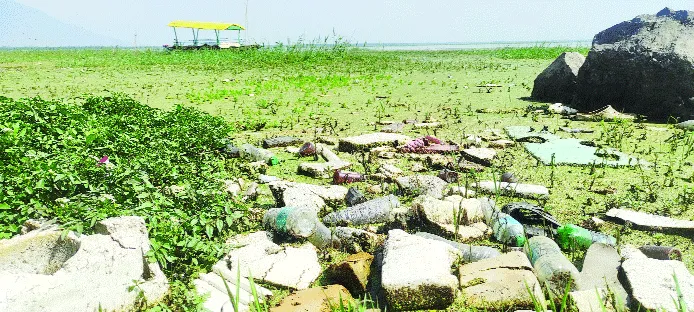
Wular Lake, one of Asia’s largest freshwater lakes and a globally recognized Ramsar wetland, has sustained generations of fishing families, migratory birds, and unique aquatic biodiversity. For thousands of people living in Bandipora and Baramulla, Wular is not merely a lake-it is a source of food, employment, culture, and identity. Yet after nearly eighteen years of conservation interventions and more than a decade under the Wular Conservation and Management Authority (WUCMA), the ecological condition of the lake remains deeply troubling.
The central question is unavoidable: if hundreds of crores have been spent and multiple restoration plans implemented, why are native fish disappearing, pollution increasing, and fishing livelihoods collapsing?
Native Fish Are Vanishing
The most alarming sign of ecological decline is the disappearance of indigenous fish species, particularly the snow trout group (genus Schizothorax), locally known as Kashir Gaad. These species once formed the backbone of Wular’s fisheries and were highly valued for their taste and market demand.
In recent years, fishermen have reported a dramatic reduction in catches of Schizothorax, and other native fishes. Even more distressing is the disappearance of Golden Mahseer, the state fish of Jammu and Kashmir and one of South Asia’s most iconic freshwater species.
The Comptroller and Auditor General (CAG) of India noted in its 2025 audit report that indigenous species such as Schizothorax richardsonii and Bangana diplostoma had disappeared from Wular Lake.
December 2025 Fish Mortality Shocked the Community
In December 2025, fishermen witnessed mass mortality of native Schizothorax species in Wular Lake and connected stretches of the Jhelum. Dead fish were found floating in several areas, triggering fear and anger among communities whose survival depends on the lake.
A report submitted by Sher-e-Kashmir University of Agricultural Sciences and Technology of Kashmir reportedly identified excessive organic load as the primary cause. Organic pollution reduces dissolved oxygen and creates conditions that can suffocate fish, especially sensitive native species.
This finding was particularly disturbing because WUCMA has stated that it conducts monthly water quality assessments in collaboration with the Jammu and Kashmir Pollution Control Committee. Yet if such monitoring was effective, why was this ecological crisis not detected and prevented in time?
Pollution from Every Direction
Wular Lake receives pollution from multiple sources:
Untreated domestic sewage from surrounding settlements Solid waste and garbage dumping Agricultural runoff containing fertilizers and pesticides Livestock waste and organic matter
Urban stormwater and market refuse
Unplanned construction and tourism infrastructure
Scientific studies have repeatedly documented eutrophication, nutrient enrichment, and increasing contamination of Wular’s water and sediments. Research published in 2025 found moderate heavy metal contamination linked to agricultural, urban, and industrial activities.
Siltation and Habitat Loss
Pollution is compounded by severe siltation. Large amounts of sediment from degraded catchments and deforested slopes continue to fill the lake, reducing depth and shrinking spawning and nursery grounds for fish.
Breeding habitats once used by native species are now covered by sediment, weeds, and waste. As water becomes shallower and warmer, oxygen levels decline and fish populations struggle to reproduce successfully.
Sand Mining and Unplanned Development
Unregulated sand extraction from river channels and lake margins disturbs aquatic habitats and increases turbidity. At the same time, poorly planned embankments, roads, tourism structures, and land modifications have altered natural hydrology.
Such interventions may appear developmental, but without ecological planning they fragment habitats and undermine the very wetland they are supposed to protect.
Conservation Without Accountability
The 2025 CAG audit paints a troubling picture. It found that many planned activities-including biodiversity conservation, livelihood improvement, awareness generation, and impact monitoring-were either inadequately implemented or dropped entirely. Monitoring bodies were not properly constituted, and several critical components remained incomplete.
This suggests that the problem is not a lack of plans or funding, but weak accountability and insufficient community participation.
Fishermen Pay the Highest Price
While institutions produce reports, fishermen experience the crisis directly. Daily catches that once supported families have declined sharply. Many young people are abandoning fishing because it no longer provides a reliable income.
The loss extends beyond fish harvests. Chestnuts, lotus stems, fodder, and other wetland resources are also declining, eroding the economic and cultural fabric of lake-dependent communities.
Who Is Responsible?
Responsibility is shared among multiple agencies and sectors:
Regulatory bodies that failed to enforce pollution controls
Local authorities that did not provide sewage and waste treatment Departments that allowed destructive extraction and development
Institutions that excluded traditional fishing communities from decision-making
Society at large for treating Wular as a dumping ground rather than a living ecosystem Wular Lake can still recover, but only through science-based and community-led restoration. Priorities should include:
Full disclosure of monthly water quality reports Independent ecological audits
Sewage treatment and solid waste management in all surrounding villages Strict regulation of sand mining and agrochemical use
Restoration of fish breeding habitats
Conservation breeding of native species, including Mahseer and Schizothorax Meaningful participation of fishermen in every decision
After eighteen years of conservation efforts, Wular Lake remains in ecological distress. Native fish are disappearing, pollution continues unchecked, and the livelihoods of thousands of fishing families are at risk. The December 2025 fish mortality event was not an isolated accident-it was a warning that the lake is approaching a critical threshold.
Saving Wular requires more than budgets and promises. It demands transparency, accountability, and respect for the communities that have protected this wetland for generations. If immediate action is not taken, Kashmir may lose not only its largest freshwater lake, but also an irreplaceable ecological and cultural heritage.
Save water save fish save fisher people
(The author is Member of Wular Fisherman Union State Organizer National Federation of Small Scale Fish Workers)