Wani Arfat
Every morning across Jammu and Kashmir, thousands of students leave their homes carrying not merely books and notebooks, but aspirations shaped by sacrifice, uncertainty, and hope. Yet, for a vast number of them, the struggle for education begins much before they enter a classroom. It begins at bus stops crowded with anxious commuters, on roads where students wait endlessly for transport, and in the silent daily anxiety of arranging money simply to reach schools, colleges, universities, libraries, and coaching centres.
At a time when the debate surrounding free public transportation is steadily gaining momentum, one fundamental question deserves serious public and governmental reflection, who genuinely requires this support the most? The answer is neither complicated nor politically convenient.
In Jammu and Kashmir, students must remain the foremost beneficiaries of any proposed free bus travel policy because no other section of society is as directly and consistently burdened by the failures and costs of the existing transport system.
Students are economically dependent members of society. They possess neither financial independence nor stable sources of income. Every rupee spent on transportation emerges from household budgets already strained by inflation, educational expenses, electricity bills, healthcare costs, and rising prices of essential commodities.
The recent 18 percent hike in transport fares has further intensified this burden, particularly for poor and middle class families struggling to sustain their children’s education in increasingly difficult economic circumstances.
For a labourer, farmer, street vendor, or daily wage earner, the issue of transportation is not a matter of convenience but survival. Families routinely sacrifice personal necessities to ensure that their children continue attending educational institutions.
In many households, transport expenditure has become one of the most financially exhausting aspects of education itself. When access to classrooms begins to depend upon a family’s economic capacity to pay daily fares, education gradually transforms from a constitutional and moral right into a privilege available only to the financially secure.
The crisis is aggravated by the fragile and uneven nature of public transport infrastructure across Jammu and Kashmir. In numerous areas, particularly rural and peripheral regions, reliable public transport remains severely inadequate. The students find themselves forced to use over-crowded public transport such as sumo buses, mini buses, and auto rickshaws which run on irregular timetables.
Some have to walk around for hours while others travel for hours standing due to lack of space inside the bus. During winter, the conditions become harsh for commuters as they have to endure the cold temperatures brought about by the snow.
Such challenges pose serious implications for learning as the students face problems of absenteeism, fatigue, and concentration in school. More alarmingly, transport expenses and unreliable connectivity compel some students to discontinue education altogether.
Such educational discontinuation is not the outcome of intellectual inability or lack of ambition, but of structural economic disadvantage. Whenever a student abandons education because reaching an institution becomes unaffordable, society itself loses a future teacher, doctor, engineer, administrator, scholar, or entrepreneur.
The burden is disproportionately heavier upon students residing in villages and geographically distant areas where transport facilities are scarce and travel distances considerably longer.
Aspirants preparing for competitive examinations such as NEET, JEE, UPSC, JKPSC, and CUET face additional difficulties because irregular and expensive transport obstructs consistent access to coaching centres, libraries, and academic spaces essential for serious preparation. Consequently, many talented students gradually fall behind not because of lack of merit, but because the pathway to education itself becomes inaccessible.
Also alarming is the issue of safety and dignity, especially for female students. Cases of sexual harassment, unwelcome remarks, verbal abuse, and extremely embarrassing instances occurring in crowded public transport have been reported on numerous occasions.
Sadly, whenever girls oppose such acts or express their grievances, they have been blamed instead of being protected. This not only indicates an issue with public transport but also highlights a general lack of sensitivity from society about the rights of women to travel to school in a safe manner.
In this context, the discourse surrounding free public transportation in Jammu and Kashmir cannot afford to imitate models adopted elsewhere without acknowledging regional realities. While several Indian states have introduced free travel schemes for broader demographic categories, the transport ecosystem of Jammu and Kashmir remains structurally weaker, financially constrained, and operationally fragile.
Government buses remain limited, multiple routes function irregularly, and reports regarding non operational fleets due to maintenance deficiencies and staff shortages continue to surface frequently.
Therefore, if public resources are to be utilised for a free transport policy, prioritisation becomes essential rather than optional. Students deserve that priority because investment in educational accessibility ultimately constitutes investment in the intellectual and economic future of society itself.
This argument does not negate support for economically vulnerable women or other deserving sections, but in conditions of limited infrastructure and constrained fiscal capacity, policy must first address the group whose future is most directly contingent upon educational continuity.
While extending free transportation facilities to women has been widely appreciated as a progressive welfare measure, an important dimension of the debate still requires thoughtful consideration. The policy currently benefits all women uniformly, regardless of their economic condition, professional status, or financial capacity. Consequently, even financially secure individuals, including well paid employees drawing substantial monthly salaries, continue to avail free transport facilities despite possessing the ability to bear transportation expenses independently.
In a region like Jammu and Kashmir, where public transport infrastructure remains limited and government resources are financially constrained, welfare policies must also reflect principles of economic prioritization and social equity. The central concern is not to oppose support for women, particularly those from economically vulnerable backgrounds, but to question whether universal free travel without economic distinction truly serves the larger public interest. When students from poor and middle class families struggle daily to arrange transport money for educational survival, the allocation of limited public resources demands greater sensitivity and balanced policy planning. A more targeted and need based approach could ensure that genuinely deserving sections receive maximum benefit while also allowing the government to strengthen transport services for students whose educational future directly depends upon affordable and reliable mobility.
A student-centric approach in transport could yield some positive results. Free transportation or even subsidized passes along with the institution’s identification card would make the process more transparent and accountable.
Specialized buses during the operating times for schools and colleges would be effective in minimizing overcrowding. Alongside with that, there must be monitoring practices put into place to stop overcharging and other abuses on the road.
There exists widespread public expectation that Omar Abdullah’s government and the administration will approach student concerns with seriousness and institutional sensitivity.
Educational advancement and youth welfare cannot remain rhetorical commitments alone. They require practical interventions capable of reducing the everyday hardships confronting students across Jammu and Kashmir.
Here, transportation cannot be considered an external factor. It is directly related to issues of educational equality, upward social mobility, respect for women’s dignity, and overall societal development. Contemporary classroom facilities, scholarships, and educational reform initiatives will hold little relevance if students still find it difficult to get to their learning centers.
ln conclusion, in case Jammu and Kashmir continues down the path of providing free public transport, students must be the ultimate recipients of the same without question. This cannot only be viewed as a matter of financial need, it is a moral obligation as well. There should never come a point where students have to abandon education because they cannot afford transportation costs.
Society that does not make things easier for its students ends up holding itself back. In case Jammu and Kashmir desires to become an enlightened, empowered, and progressive society in the future, the journey towards educational attainment must first become easy for all students.
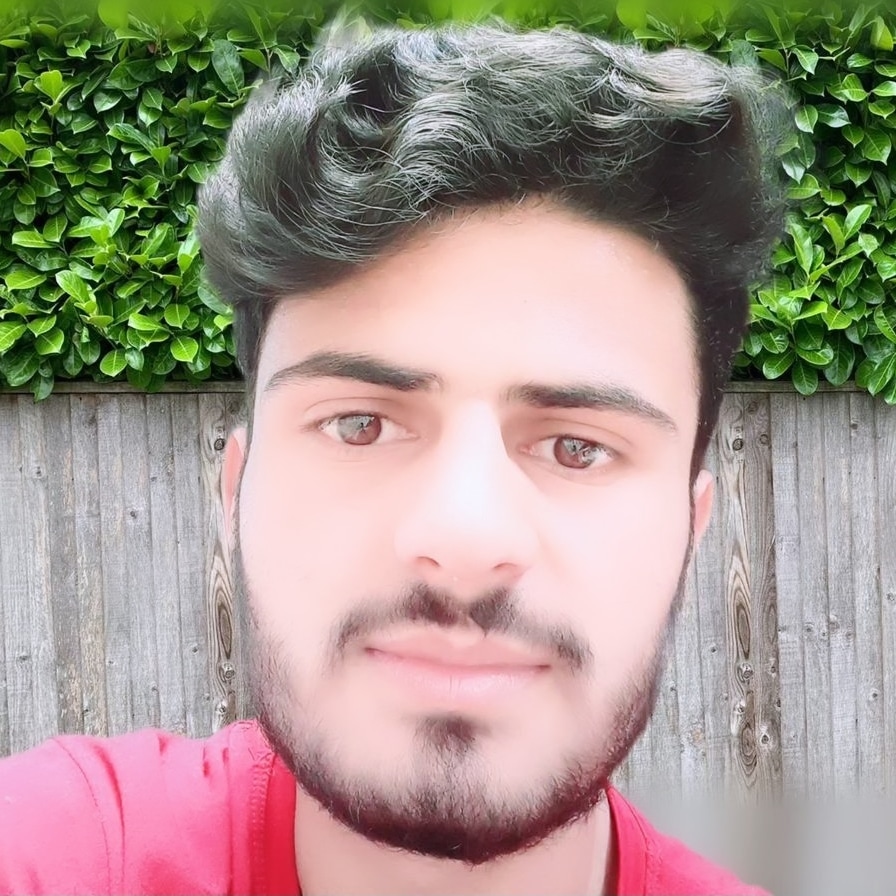
(Mohammad Arfat Wani is a writer, social activist, and medical student from Kuchmulla, Tral. He writes on social issues, culture, and public concerns with the aim of raising awareness and inspiring positive change. Email: wania6817@gmail.com)