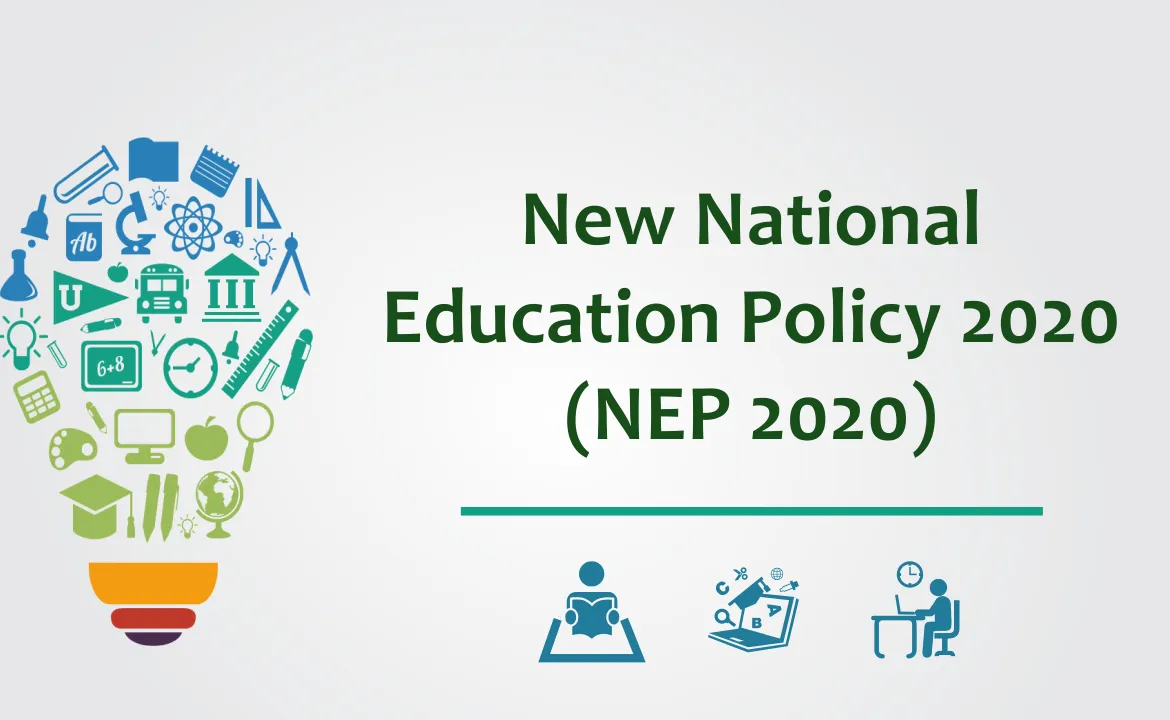
For nations building their future, education has always been the cornerstone. The quality of education affects the economic strength of a nation and also the character, imagination and confidence of its people. With one of the largest education systems in the world, India is at the cusp of a moment where demographic dividend, technological prowess and global opportunities converge. National Education Policy (NEP) 2020 is a landmark step in reorienting and revamping the education system of India for its youth. It’s not just a policy document, it’s a blueprint to prepare learners for a future where knowledge, innovation and adaptability are the hallmarks of progress.
For decades, the Indian education system had a legacy of structures that often promoted limited choices, rigid academic boundaries and examination-driven learning. The country has given birth to great scholars, scientists, professionals and leaders, but it is becoming more and more necessary to develop an education model that can meet the challenges of the modern world. We need people in the 21st century who can think critically, solve complex problems, work across disciplines and continually upgrade their knowledge.” NEP 2020 was introduced with this understanding to take education beyond rote learning to creativity, research, skill development and lifelong learning.
One of the biggest contributions of NEP 2020 is its focus on making education more holistic and multidisciplinary. In the world of today, the real problems are not confined within the boundaries of any one subject. For climate change, artificial intelligence, public health, entrepreneurship and social development, knowledge from different fields must work together to tackle them. The policy’s emphasis on allowing students to explore various disciplines provides them with more academic freedom and prepares them for diverse career opportunities. A science student can learn humanities, a commerce student can learn technology, a literature student can learn innovation and entrepreneurship. This flexibility is a major change in the way higher education is viewed.
Monitoring is essential to track that educational reforms lead to actual change, and do not remain mere paper documents. Effective monitoring is not about collecting reports or statistics, but understanding what is going on in classrooms, laboratories and institutions. Are students getting a better learning experience? Are teachers trained correctly? Are digital resources accessible to all parts of society? Is research and innovation getting better? These questions have to guide the evaluation. An open and evidence-based monitoring system allows to identify challenges at an early stage and allows institutions to make the required improvements.
Research and innovation is yet another area where NEP 2020 provides new hope. “No country can be a global knowledge leader without investments in original ideas and scientific thinking. India has a rich intellectual tradition but modern higher education needs stronger research ecosystems, better funding opportunities and greater collaboration between universities, industries and society. If we motivate our young researchers, facilitate the setting up of innovation centres and cultivate a culture of inquiry, India can move from being a consumer of knowledge to a creator of knowledge.
Technology, too, has become an inevitable part of educational development. Recent years have demonstrated that digital learning can expand access, but have also exposed inequities in connectivity and resources. In NEP 2020, technology is viewed as a way to enhance education rather than replace human learning. The challenge for institutions is to judiciously use digital platforms and ensure that students from rural, remote and economically weaker backgrounds are not left behind. The focus must be on inclusive digital transformation.
Another important aspect of NEP 2020 is its stress on equity and inclusion. A really good education system is one where every student gets opportunities irrespective of their socio-economic or geographical background. India’s strength lies in its diversity, but diversity also requires policies to cater to different needs. To achieve the broader goals of educational justice and national development, it is necessary to increase access, support disadvantaged groups, promote multilingual learning and create a student-friendly academic environment.
Faculty play a central role in this transformation. But even the most sophisticated policy will not work without motivated, well-prepared teachers. If we want real reform, we need ongoing professional development, academic freedom, research and recognition of teachers’ contributions. Teachers don’t just pass on knowledge, they inspire curiosity, build confidence and shape future generations. When you empower teachers, you empower the education system as a whole.
The future success of education reforms will depend on collaboration. Government institutions, universities, industries, researchers and communities should work together instead of working separately. Sharing successful models, learning from challenges and encouraging academic partnerships could speed up the implementation process. National discussions, seminars and policy dialogues provide important spaces for exchange of experience and generation of practical solutions.
NEP 2020 aims to develop an education system in tune with the vision of Viksit Bharat by 2047. It takes steady dedication, a truthful assessment and shared accountability to do that. Policies set direction, people make change. If India can bring together vision and implementation, innovation and inclusiveness, excellence and accessibility, she can create a higher education system that is not only on a par with global standards but also mirrors India’s values, aspirations and potential. The journey from policy to implementation is difficult, but this is the process that will determine the future of Indian education.
(Author is Chairman Centre for NaMo Studies (CNMS) & Convenor of NaMo Viksit Bharat Samvad. Email: profjasimmd@gmail.com )
www.namostudies.com
Email: modistudies@gmail.com
Mobile No. 099970 63595