Nature has been extraordinarily generous to Jammu and Kashmir. So generous, in fact, that were every possible tourist site to be developed and promoted with the care it deserves, a visitor could spend two full months here and still not see it all. This is not hyperbole. It is a simple, verifiable fact about the sheer density of natural wealth packed into this Union Territory. Yet the reality on the ground tells a very different story. Instead of a region-wide spread of destinations, the overwhelming bulk of tourist traffic funnels into four names: Srinagar, Gulmarg, Pahalgam and Sonamarg. Everything else waits in the wings, undiscovered and unpromoted.
Chief Minister's remarks at the Conclave on Sustainable Tourism Planning deserve to be taken seriously rather than filed away as another well-meaning speech. His central argument was blunt: tourism without sustainability is not really tourism at all, but a slow-motion disaster that may look prosperous for a few seasons before collapsing under its own weight. He is right. But the harder question is what happens after the applause dies down.
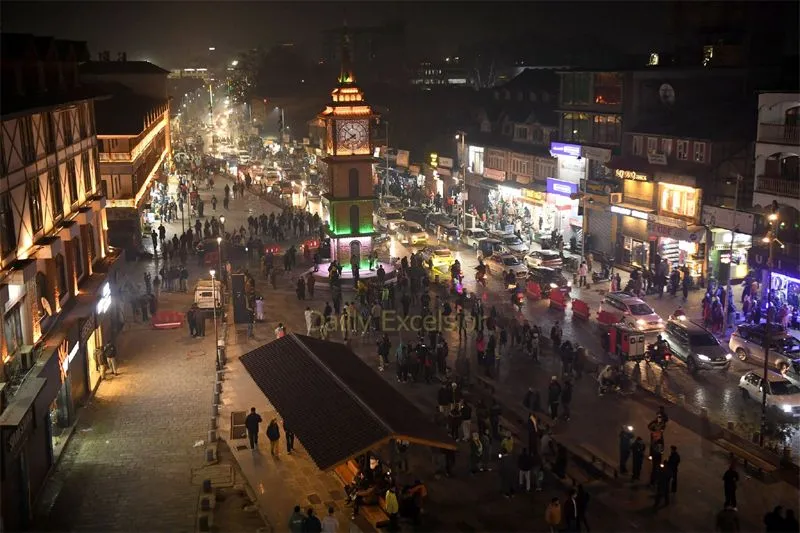
Consider the arithmetic of modern travel. Most families today own not one but multiple vehicles, and the overwhelming preference is to drive to a destination in one's own car rather than rely on shared transport. Multiply this by the scale of visitors now flowing into Kashmir, and the result is entirely predictable: a volume of vehicles that no hill destination's roads or parking infrastructure was ever designed to absorb. The traffic jams and gridlock that have become a fixture of the peak season are not an unfortunate accident; they are the mathematical outcome of private-vehicle-led tourism meeting finite mountain roads.
The only realistic remedy is mass transportation, and it must be green. In the absence of a metro-lite rail system, a substantial fleet of electric buses running at affordable fares is the most immediately deployable solution. An alternative or complementary lever is a steep green tax on private vehicles entering ecologically sensitive zones - a disincentive that nudges people towards shared transport. Each approach carries trade-offs: e-buses require upfront capital and charging infrastructure, while a green tax risks being seen as elitist in a country as populous and price-sensitive as India, where catering only to high-spending tourists is neither fair nor scalable. The sensible path is to build the transport backbone that makes mass tourism survivable.
Infrastructure expansion, meanwhile, cannot simply be scaled up at will. Restrictions imposed by the National Green Tribunal and the Supreme Court on construction in ecologically fragile zones are not obstacles to be worked around, but reflect real ecological limits. What is achievable within those limits is nature-friendly, low-footprint construction - though even this has its ceiling. Beyond a point, more buildings simply mean more damage, whatever material they are built from.
This is precisely why diversification is not optional but essential. Doda, Kishtwar, Udhampur, Ramban, Kathua, Rajouri and Poonch possess the same snow, meadows, rivers and valleys that draw millions to Kashmir's four favourites. What they lack is investment, promotion and connectivity. A tourism policy that remains Kashmir-centric will keep funnelling ever more people into the same fragile handful of sites, no matter how many conclaves are held on carrying capacity.
Then there is waste - the issue every official speech acknowledges and no administration has yet solved. Solid waste, garbage accumulation and inadequate sewerage at tourist destinations are steadily poisoning the forests, meadows and water bodies that are the entire basis of the tourism economy. Fine words about scientific waste management mean nothing without a costed, scheduled action plan and the civic will to enforce it.
The Chief Minister is correct that sustainability cannot rest on knee-jerk reactions. But nor can it rest indefinitely on verbal concerns. What is needed now is a single, time-bound implementation roadmap - covering e-mobility, green taxation, destination diversification and waste management - drawn up in genuine consultation with transport operators, local communities and environmental experts, then executed in clearly sequenced phases with accountability built in.
Nature has already sent its warnings through choked highways, receding glaciers and polluted lakes. It all depends upon what is done in the next few years, not on what is said at the next conclave.